


In a world where technology and electronic options are becoming more common, safety matches are still a key part of both home and industrial uses. Even though lighters and other ignition devices are becoming more popular, safety matches are still critical in international trade. They are necessary in areas with certain economic needs because they are cheap, reliable, and beneficial for the environment. This is especially true in developing countries and industries that need controlled ignition sources.
As the demand for safety matches around the world grows, manufacturers in the top exporting countries are seeing new chances. Let’s look at the most important trends in the safety -match export market and the countries that are shaping this important industry.
Current Trends in the Global Safety Matches Export Market
The global safety matches export market is undergoing a transformation driven by evolving consumer demands, advancements in manufacturing technologies, and increasing environmental concerns. Despite the rise of electronic ignition devices, safety matches remain an essential product for households, outdoor enthusiasts, and industrial sectors worldwide.
1. Sustainability and Eco-Friendly Manufacturing
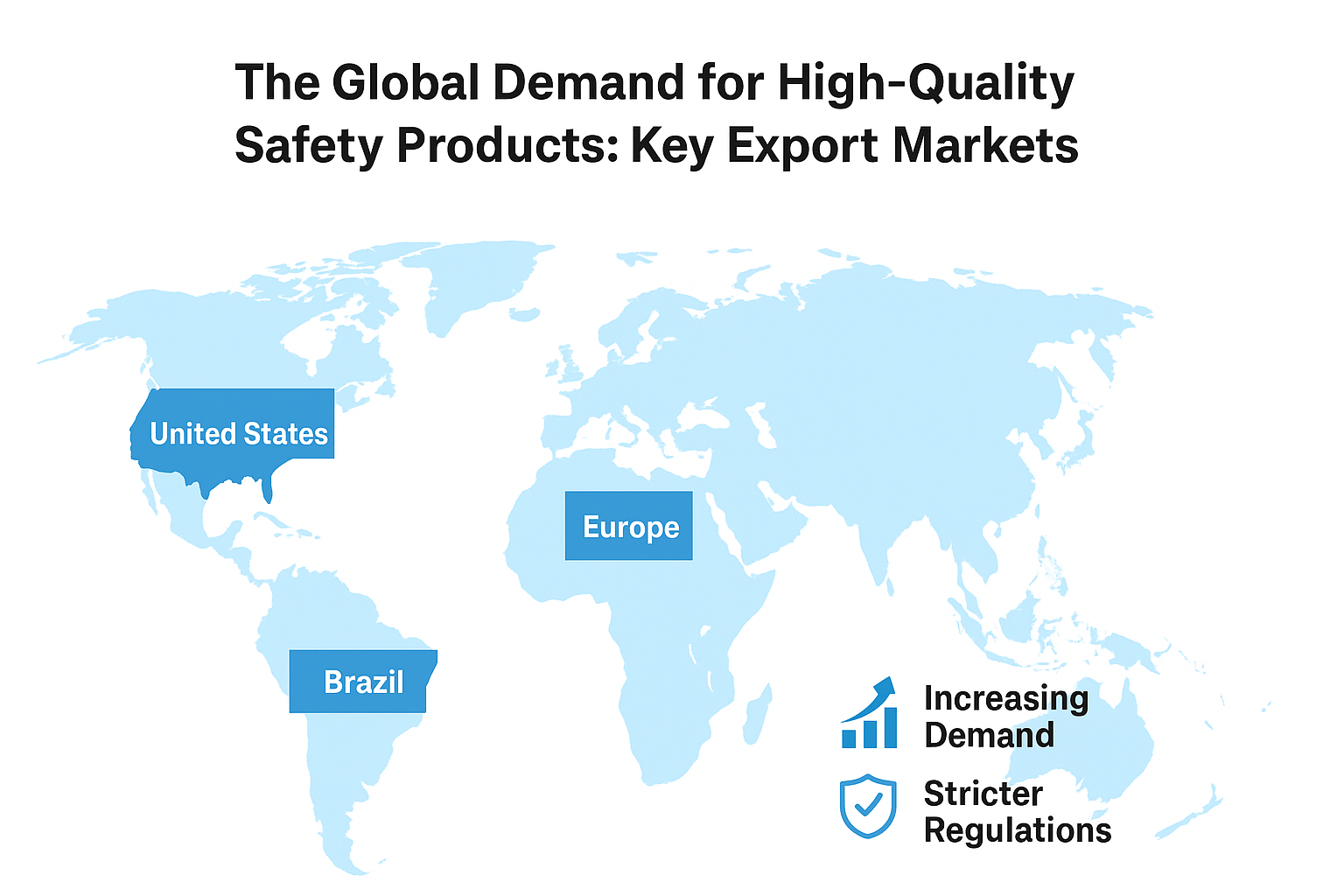
As sustainability becomes a central focus across industries, safety match manufacturers are adopting eco-friendly practices. They are increasingly sourcing renewable materials, such as FSC-certified wood, and using non-toxic chemicals in match production. Biodegradable and recyclable packaging is replacing plastic, aligning with the global effort to reduce waste. These environmentally responsible measures not only attract eco-conscious consumers but also help companies comply with stricter environmental regulations, especially in Europe, North America, and parts of Asia.
2. Growth in Emerging Markets
Emerging economies in Africa, Asia, and Latin America are experiencing rapid growth in demand for safety matches. Rising disposable incomes, expanding populations, and increasing interest in outdoor recreation are driving this demand. Countries such as India, Brazil, and Nigeria are witnessing a rise in match consumption for both household and industrial purposes. Furthermore, as industrial sectors like mining and construction continue to expand, the demand for safety matches in controlled ignition applications remains robust.
3. Technological Advancements in Manufacturing
Automation and innovation in manufacturing are enhancing production efficiency, minimizing waste, and improving product consistency. The integration of robotics and advanced machinery allows manufacturers to produce matches at higher volumes while maintaining quality. Furthermore, technological advancements are enabling more convenient packaging designs, such as childproof or easy-to-open boxes, addressing both safety concerns and consumer demand for user-friendly products.
4. Diversification and Premium Products
To stand out in an increasingly competitive market, manufacturers are diversifying their product offerings. Premium, designer safety matches are gaining popularity, especially in affluent regions such as Europe and North America, where consumers appreciate aesthetically pleasing packaging and high-quality materials. Specialty matches designed for outdoor activities, industrial applications, or personalized branding for promotional purposes are also becoming more common. This trend toward customization and luxury enables manufacturers to target niche markets that seek more than just basic functionality.
5. Emphasize Quality and Safety Standards
As global trade expands, manufacturers are increasingly prioritizing compliance with safety and quality standards to build trust and ensure product reliability. International certifications, such as ISO and environmental standards, have become essential for meeting the regulatory requirements of various countries. Furthermore, stricter safety regulations ensure that matches adhere to fire safety guidelines, protecting consumers from accidents and reinforcing brand credibility.
Key Export Markets for Safety Matches
The international safety matches trade is fueled by both developed and developing economies. In regions where lighter technology is less accessible or not as widely adopted, safety matches remain a dominant product.
1. India: A Leading Exporter
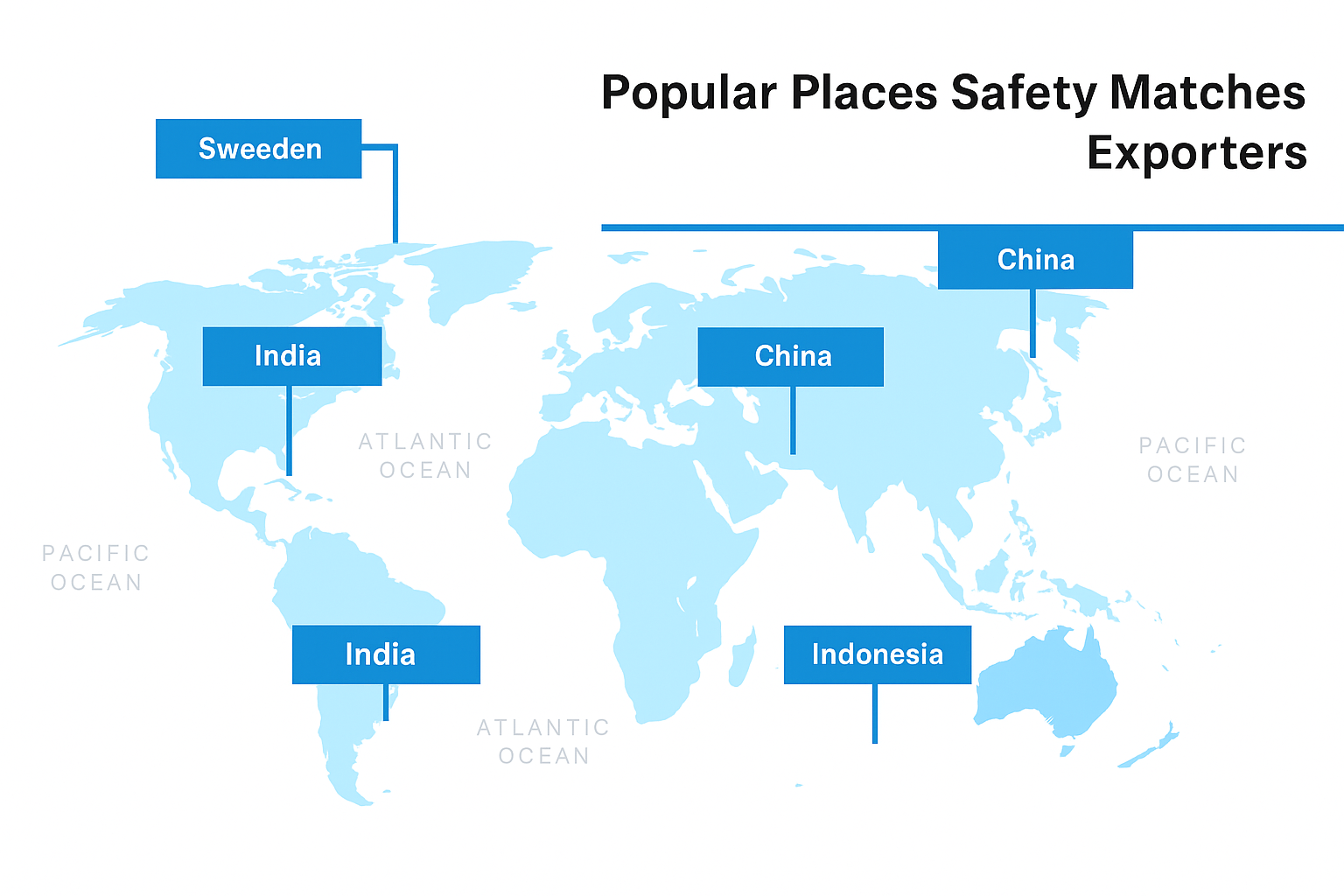
India has long been one of the world’s largest producers and exporters of safety matches. The country’s vast production capacity and low labor costs make it a key player in the global safety match industry. Indian manufacturers export safety matches to markets across Africa, Asia, the Middle East, and Latin America. Additionally, India has developed a well-established export network that ensures its safety matches are widely available at competitive prices.
India’s emphasis on using renewable resources for matchstick production, such as wood from sustainable forests, enhances its appeal in eco-conscious markets. Furthermore, stringent safety standards and a commitment to quality control make Indian safety matches a trusted choice worldwide.
The international safety matches trade is fueled by both developed and developing economies. In regions where lighter technology is less accessible or not as widely adopted, safety matches remain a dominant product.
2. China: Growth and Innovation
China, with its manufacturing prowess and advanced infrastructure, has quickly become a dominant force in the global safety matches trade. While China produces a range of ignition products, its focus on innovation and high-volume production allows it to offer a wide variety of safety match products.
Chinese manufacturers have increasingly invested in automation and technology to meet the growing demand for high-quality products. This, along with government support for the manufacturing sector, has allowed Chinese companies to maintain competitive pricing and a significant market share, particularly in the Asia-Pacific region and other emerging markets.
3. Sweden: High-Quality and Eco-Friendly Matches
Sweden has built a reputation for producing premium quality safety matches. Known for its tradition of craftsmanship, Swedish manufacturers produce matches that are often marketed as high-end or premium products. Sweden’s focus on sustainability has also made it a leader in producing eco-friendly, high-quality safety matches.
Swedish manufacturers have aligned their products with global trends, focusing on environmentally friendly practices, such as using non-toxic match heads and packaging made from recycled materials. These initiatives have made Swedish matches popular in more affluent markets such as Europe, North America, and parts of the Middle East.
4. Indonesia: Expanding Its Export Footprint
Indonesia has also become an important exporter of safety matches, especially to neighboring countries in Southeast Asia and beyond. Indonesia’s match industry benefits from a wealth of natural resources, including a strong wood industry, which provides a steady supply of raw materials for production.
The country’s well-established manufacturing base and growing international trade relations have made it a significant player in the global market. In addition, Indonesia’s competitive pricing strategies make its safety matches an attractive choice for price-sensitive markets.
5. Other Emerging Markets
Other emerging economies, such as Brazil, Thailand, and Egypt, are also showing promise as key players in the safety matches export market. These countries have increasingly invested in matchstick production and export infrastructure, capitalizing on local resources and labor to produce matches for international markets.
The global demand for safety matches is expected to continue its upward trajectory, driven by both established markets and emerging economies. As manufacturers adapt to shifting market dynamics, trends such as sustainability, automation, and product differentiation will help shape the future of the industry.
Countries like India, China, Sweden, and Indonesia are leading the way in safety match exports, and their continued investments in innovation and eco-friendly practices are positioning them to meet the needs of an increasingly globalized market. As the world continues to value the affordability, reliability, and environmental benefits of safety matches, this humble yet essential product will remain a vital player in global trade.