Making mistakes when selecting or using Personal Protective Equipment (PPE) can have serious consequences. These may include an increased risk of injury or occupational illness, reduced productivity, enforcement action by regulatory authorities, legal repercussions, and long-term reputational damage to an organisation. Employers have a legal duty to provide suitable PPE and to ensure that it is used correctly. Failure to do so can result in significant penalties.
Reasons Employees May Wear PPE Incorrectly
Uncomfortable or poorly fitting PPE
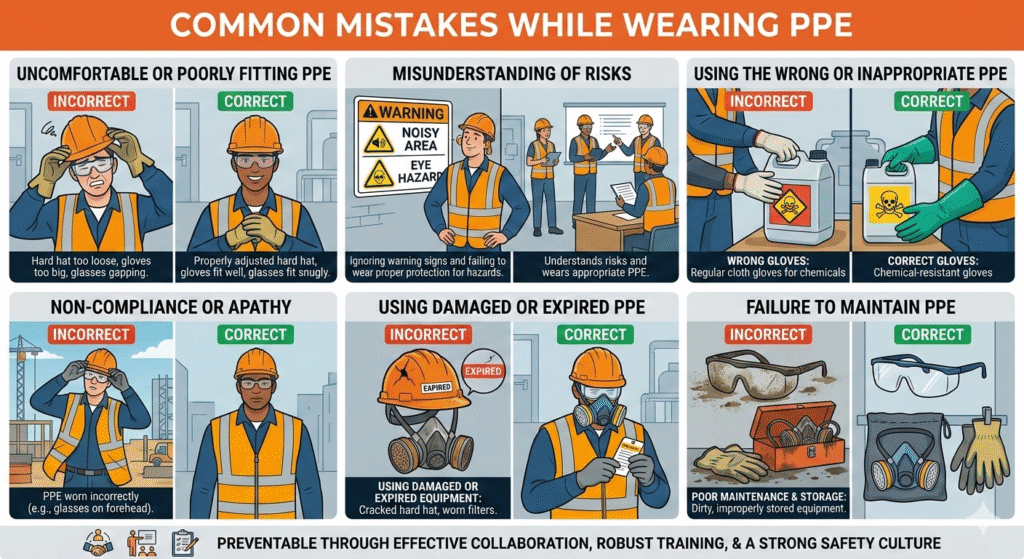
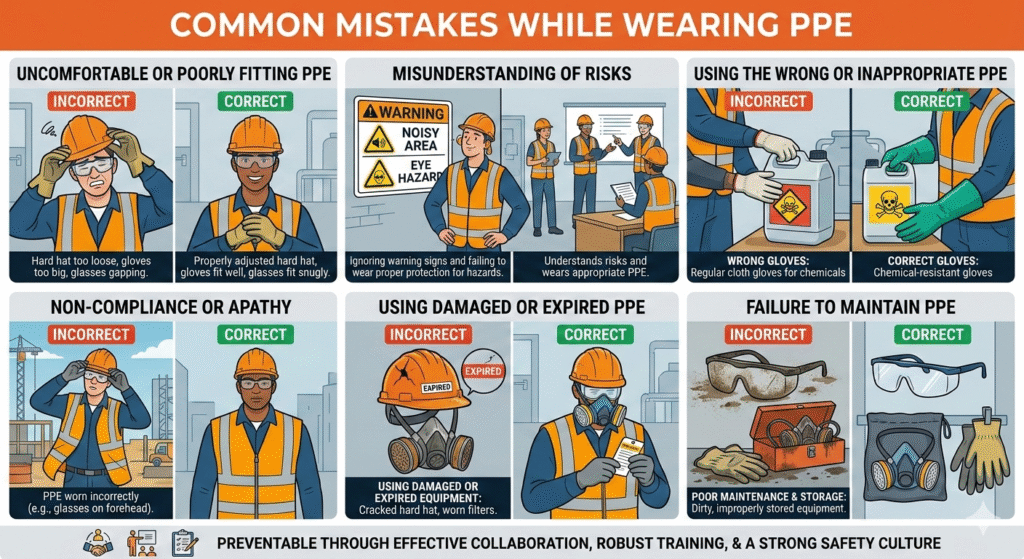
Ill-fitting or uncomfortable PPE can discourage proper use. Employers should involve employees in the PPE selection process, provide a range of sizes and options, and address concerns related to discomfort. Comfortable, well-fitted PPE increases compliance and overall safety.
Misunderstanding of risks
Some employees may underestimate workplace hazards or fail to appreciate the importance of PPE. Employers must ensure workers understand the risks they are exposed to and why wearing PPE correctly is essential. Clear communication and regular training are key.
Using the wrong or inappropriate PPE
Employees may use incorrect PPE if they are unaware of the specific hazard involved. Employers should clearly identify workplace hazards and ensure staff understand which PPE is required for each task or environment.
Non-compliance or apathy
In some cases, workers may intentionally wear PPE incorrectly or take shortcuts. This can stem from poor safety culture or lack of supervision. Employers must provide adequate oversight, reinforce safety expectations, and address non-compliance promptly.
Using damaged, worn, faulty, or expired PPE
Even when PPE has been selected and worn correctly, it may still pose a risk if it is damaged or expired. Regular inspections should be carried out to identify wear and tear, faults, or expiry dates. Employees should receive clear instructions on when and how to replace PPE.
Failure to maintain PPE
Poorly maintained PPE can significantly reduce its protective effectiveness. Employees should be trained on correct cleaning, maintenance, and storage procedures, and employers should ensure suitable storage facilities are available.
Conclusion
Common PPE errors—such as using inappropriate, damaged, or poorly maintained equipment—can often be prevented. Most issues can be significantly reduced through effective collaboration between employers and employees, robust training programmes, regular inspections, and a strong safety culture. By ensuring PPE is correctly selected, worn, maintained, and enforced, organisations can better protect their workers and reduce the risk of costly accidents, illnesses, and legal consequences.