


Windsocks play a critical role in aviation safety, helipads, industrial sites, highways, and construction zones by providing a clear visual indication of wind direction and speed. However, improper installation can make a windsock unreliable or even dangerous. Unfortunately, many installations fail to meet basic standards due to simple but costly mistakes.
In this article, we’ll explore the most common windsock installation mistakes and explain how to avoid them to ensure accuracy, durability, and compliance with safety regulations.
1. Placing the Windsock at the Wrong Height
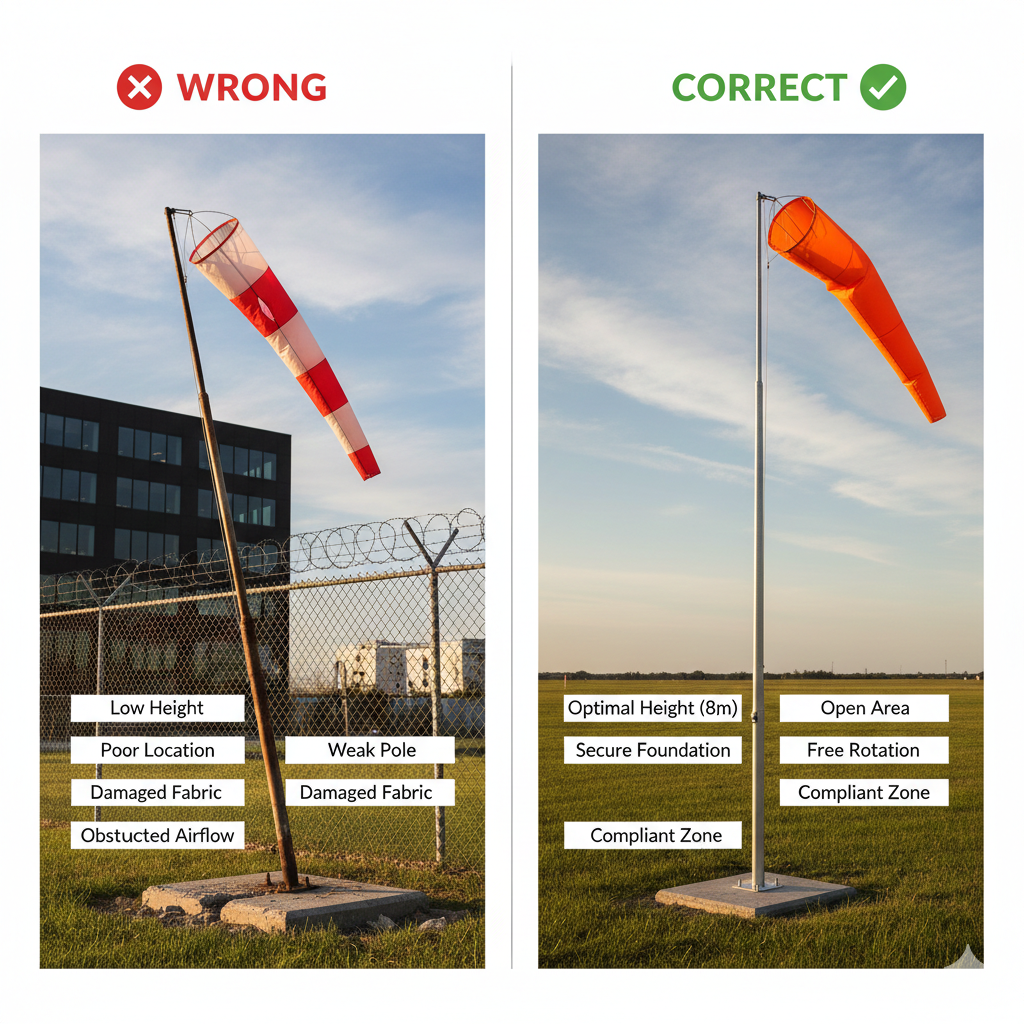
One of the biggest mistakes is installing the windsock too low or too high. When it’s too close to the ground, buildings, trees, and walls block the wind. When it’s too high, it becomes hard to see and maintain.
What works best:
Place the windsock at a height where it can catch clean airflow and still be clearly visible. A height of around 6–10 meters is usually ideal for most locations.
2. Choosing a Poor Location
A windsock won’t work properly if it’s installed in the wrong spot. Many people place it too close to buildings, fences, or towers without realizing how much these structures disturb the wind.
Better approach:
Always choose an open area with enough space around it. The more free the airflow, the more accurate the wind direction will be.
3. Ignoring Natural Wind Flow
Wind doesn’t behave the same everywhere. Hills, nearby structures, and even roads can change how wind moves. Installing a windsock without observing these patterns can lead to misleading readings.
Simple tip:
Spend some time watching how the wind behaves in the area during different times of the day. This helps you pick the most reliable spot.
4. Using the Wrong Windsock Type
Not all windsocks are made for every environment. Using a small or low-quality windsock in a high-wind or outdoor area can lead to quick damage and poor visibility.
What to do instead:
Use a strong, weather-resistant windsock made from good-quality fabric. Make sure the size matches your application, especially for aviation or industrial use.
5. Weak or Unstable Installation
A loose pole or poorly fixed base is not just inaccurate—it’s dangerous. Over time, weak mounting can cause the windsock to tilt, jam, or fall.
Best practice:
Ensure the pole is firmly anchored and the frame rotates freely. Strong foundations and corrosion-resistant materials make a big difference.
6. Restricted Movement of the Windsock
Sometimes the windsock looks fine but doesn’t rotate properly because of tight fittings or damaged bearings. This gives an incorrect wind direction.
Quick check:
After installation, manually move the windsock to make sure it turns smoothly in all directions.
Final Thoughts
A windsock might seem like a small detail, but it plays a big role in safety. Most problems come from simple mistakes wrong location, poor mounting, or lack of maintenance. When installed correctly, a windsock gives clear, reliable wind information and lasts much longer.
Taking the time to do it right can prevent accidents, improve safety, and save money in the long run.