


Fire safety is not just a legal requirement for factories it is a critical responsibility that protects human lives, property, and business continuity. Industrial environments often invThis is where fire safety becomes essential. Fire safety is not merely a regulatory requirement; it is a life-saving responsibility. A single fire incident can put lives at risk, destroy valuable property, and disrupt business operations for weeks, months, or even permanently. Fortunately, most workplace fire accidents are preventable. By implementing effectivolve flammable materials, heavy machinery, electrical systems, and high temperatures, all of which significantly increase fire risk. Implementing strong fire safety measures can prevent accidents, reduce damage, and save lives.
e fire safety measures, organizations can protect their employees, safeguard assets, and ensure continuity of operations.
Compliance with workplace fire safety regulations under OSHA or India’s National Building Code of India goes beyond meeting legal obligations. It reflects a commitment to ensuring that every employee returns home safely at the end of the day. This blog offers a clear overview of essential fire safety measures and emphasizes the importance of building a workplace culture that prioritizes safety and the value of human life.
1. Conduct Regular Fire Risk Assessments
Routine fire risk assessments help identify potential hazards before they escalate into emergencies. Employers should evaluate fire risks, document findings, and take corrective action whenever necessary.
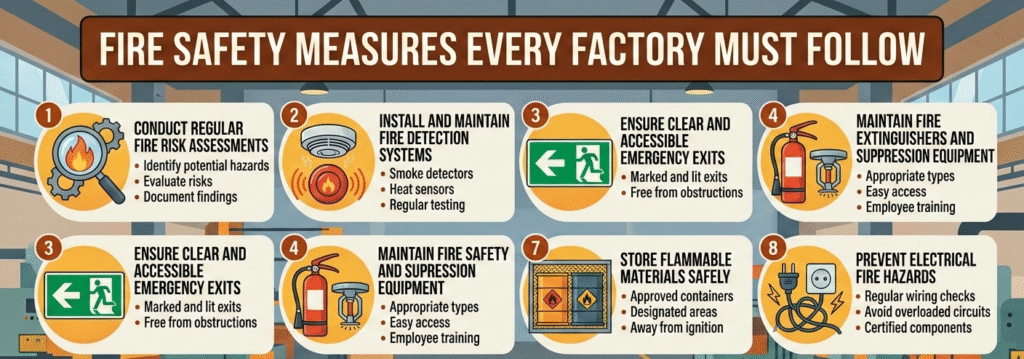
2. Install and Maintain Fire Detection Systems
Early detection is essential for minimizing damage and saving lives. Smoke detectors, heat sensors, and fire alarm systems must be installed appropriately and inspected regularly to ensure they function correctly during emergencies.
3. Ensure Clear and Accessible Emergency Exits
Emergency exits must be clearly marked, well-lit, and free from obstructions at all times. Employees should be familiar with all evacuation routes to enable a safe and orderly exit during a fire.
4. Maintain Fire Extinguishers and Suppression Equipment
Fire extinguishers and suppression systems should be suitable for workplace risks, easily accessible, and regularly inspected. Employees must receive training on how and when to use this equipment safely.
5. Provide Fire Safety Training to Employees
Regular fire safety training reduces panic and confusion during emergencies. Employees should understand evacuation procedures, alarm response, emergency communication, and basic firefighting techniques.
6. Develop and Communicate an Evacuation Plan
A clear and documented evacuation plan is essential. It should outline escape routes, emergency exits, assembly points, and the responsibilities of designated personnel during a fire incident.
7. Store Flammable Materials Safely
Flammable liquids and hazardous substances must be stored in approved containers and designated areas away from ignition sources. Proper storage significantly reduces the risk of accidental fires.
8. Prevent Electrical Fire Hazards
Electrical faults are a leading cause of workplace fires. Regular inspection of wiring and equipment, avoiding overloaded circuits, and using certified electrical components help prevent electrical-related incident
9. Keep Fire Doors Closed and in Good Condition
Fire doors help slow the spread of fire and smoke, providing valuable evacuation time. They should always remain closed and be regularly checked to ensure proper operation.
10. Establish a Fire Safety Committee and Reporting System
A dedicated fire safety team helps monitor compliance, conduct inspections, and manage emergency preparedness. Clear reporting systems encourage employees to report hazards promptly and maintain accountability.
Conclusion
Fire safety in factories is a continuous process, not a one-time setup. By combining risk assessment, modern detection systems, employee training, proper maintenance, and regulatory compliance, factories can significantly reduce fire hazards.
Investing in fire safety protects not only assets and production but, most importantly, human lives. A safe factory is a productive factory.
Fire safety isn’t just about rules it’s about protecting people, their families, and the livelihoods they depend on. A workplace fire can change lives in seconds, but the right precautions can prevent tragedy. By following these ten simple yet powerful fire safety rules, organizations not only protect their teams but also demonstrate that employee wellbeing truly comes first.
When employees feel safe, they work with confidence and peace of mind. Safety builds trust, and trust builds stronger teams and successful businesses.