


Industrial safety is a critical pillar of sustainable industrial growth. As industries expand in scale and complexity, the risks related to machinery, chemicals, electrical systems, and workplace environments also increase. In India, the Bureau of Indian Standards (BIS) plays a vital role in minimizing these risks by setting benchmarks that ensure safety, quality, and reliability across industrial operations.
What is BIS?
The Bureau of Indian Standards is the national standards body of India, operating under the Ministry of Consumer Affairs, Food & Public Distribution. BIS is responsible for formulating, certifying, and enforcing standards that safeguard human life, property, and the environment.
When it comes to industrial safety, BIS acts as both a regulator and a guide, helping industries adopt best practices that reduce accidents and occupational hazards.
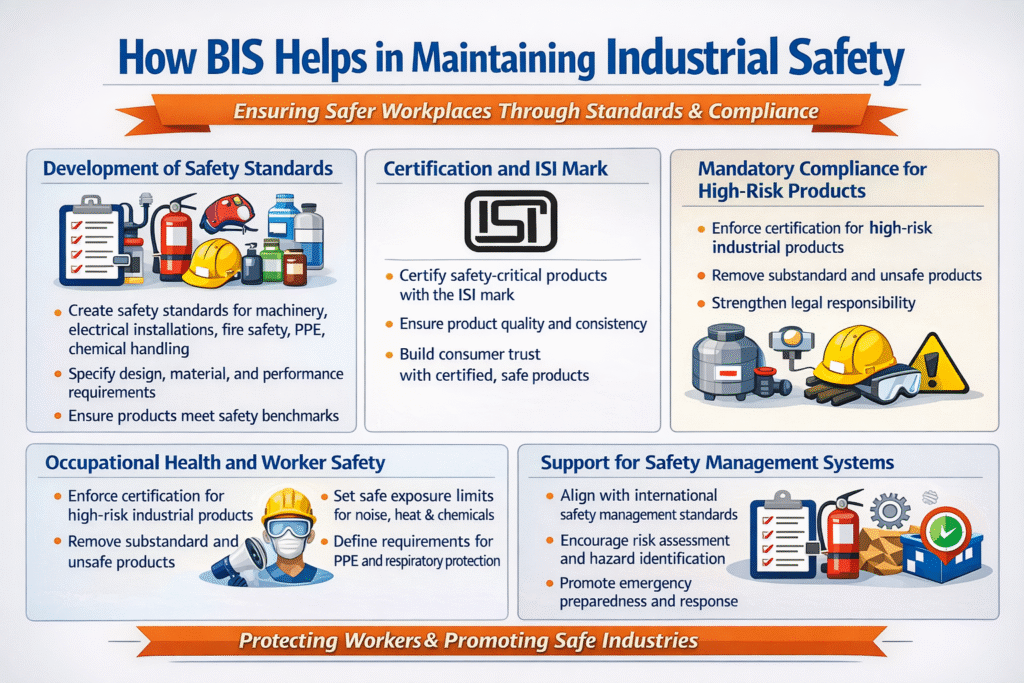
How BIS Helps in Maintaining Industrial Safety
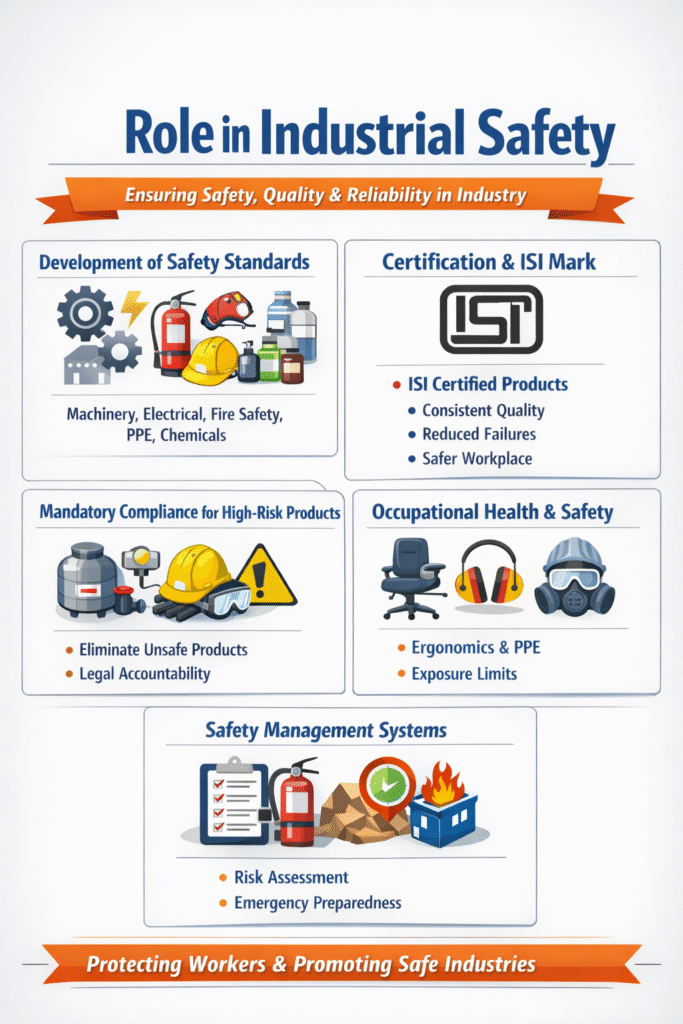
1. Development of Safety Standards
BIS formulates Indian Standards (IS) for a wide range of industrial activities and products, including:
- Industrial machinery and tools
- Electrical installations and equipment
- Fire safety systems
- Personal Protective Equipment (PPE)
- Chemical handling and storage
These standards specify design requirements, material quality, performance limits, and testing methods, ensuring that products and processes are safe for industrial use
2. Certification and ISI Mark
One of the most visible contributions of BIS to industrial safety is its product certification system, commonly recognized by the ISI mark.
Industries that manufacture safety-critical products—such as helmets, safety shoes, pressure vessels, or electrical appliances—must comply with BIS standards to obtain certification.
This ensures:
- Consistent product quality
- Reduced equipment failure
- Lower risk of workplace accidents
3. Mandatory Compliance for High-Risk Products
For certain high-risk industrial products, BIS certification is mandatory by law. This includes items that, if substandard, could cause serious harm to workers or infrastructure.
Mandatory compliance helps:
- Eliminate unsafe products from the market
- Protect workers from hazardous equipment
- Strengthen legal accountability in industrial operations
4. Occupational Health and Worker Safety
BIS standards also address occupational health, focusing on:
- Ergonomic workplace design
- Safe exposure limits for noise, heat, and chemicals
- Protective clothing and respiratory equipment
By following these standards, industries can reduce long-term health issues such as hearing loss, respiratory diseases, and repetitive stress injuries.
5. Support for Industrial Safety Management Systems
BIS aligns many of its standards with international best practices, enabling industries to integrate safety into their management systems. These standards encourage:
- Risk assessment and hazard identification
- Preventive maintenance
- Emergency preparedness and response
This systematic approach helps organizations move from reactive safety measures to proactive safety culture.
Conclusion
Industrial safety cannot be left to chance. Through comprehensive standards, effective certification systems, and sustained awareness initiatives, the Bureau of Indian Standards plays a fundamental role in creating safer industrial environments in India. For industries, adherence to BIS standards is not merely a legal requirement but a responsible commitment to protecting lives, safeguarding assets, and promoting sustainable development.