
A Practical Guide to Ensuring Workplace Safety and Emergency Preparedness
Every workplace faces unique safety challenges, making it essential to select a first aid kit that aligns with your industry’s specific risks and operational requirements. A properly equipped first aid kit enables organizations to respond quickly to minor injuries and medical emergencies, helping to protect employees and maintain a safer work environment.
For offices, a basic first aid kit with bandages, antiseptic wipes, pain relievers, and emergency supplies may be sufficient. Construction sites, manufacturing facilities, and warehouses often require more comprehensive kits that include trauma dressings, eye wash solutions, burn treatments, and protective equipment.
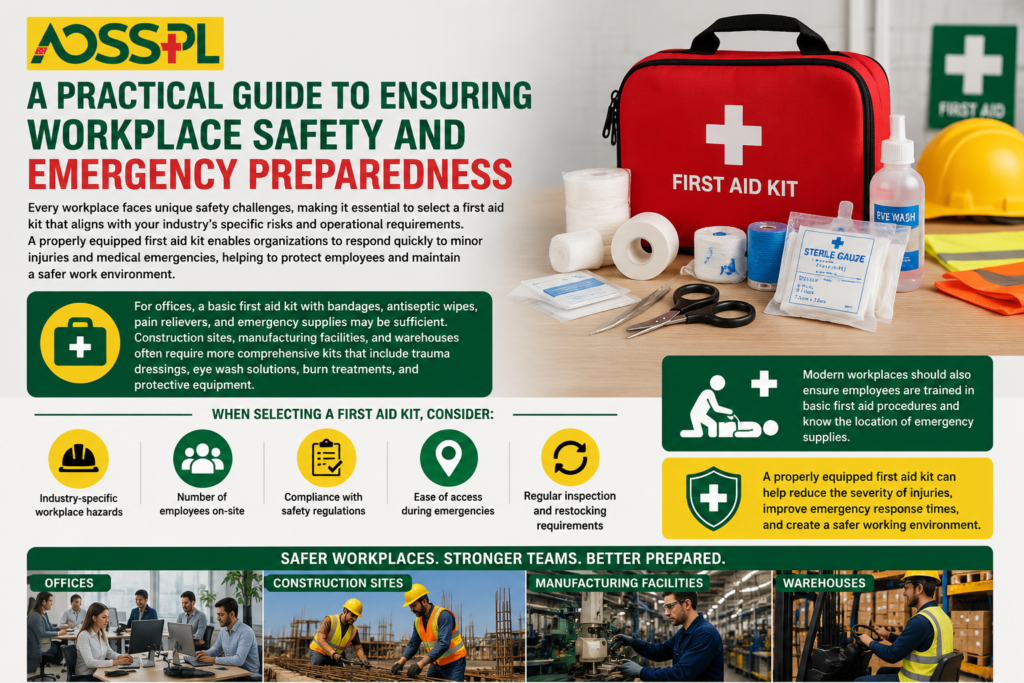
When selecting a first aid kit, consider:
- Industry-specific workplace hazards
- Number of employees on-site
- Compliance with safety regulations
- Ease of access during emergencies
- Regular inspection and restocking requirements
Modern workplaces should also ensure employees are trained in basic first aid procedures and know the location of emergency supplies. A properly equipped first aid kit can help reduce the severity of injuries, improve emergency response times, and create a safer working environment.
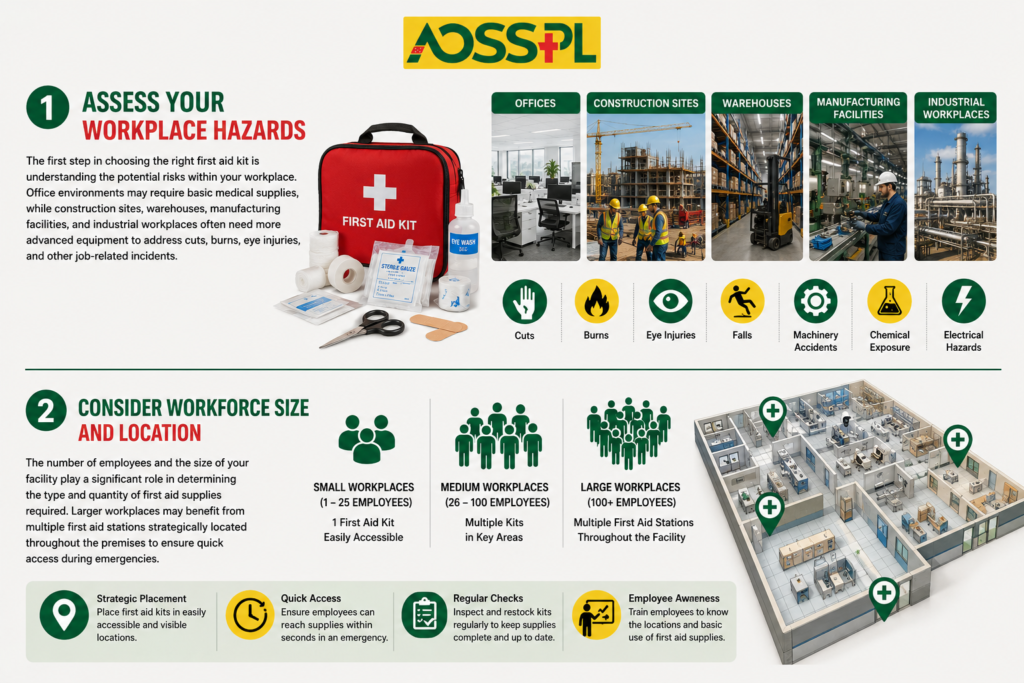
Assess Your Workplace Hazards
The first step in choosing the right first aid kit is understanding the potential risks within your workplace. Office environments may require basic medical supplies, while construction sites, warehouses, manufacturing facilities, and industrial workplaces often need more advanced equipment to address cuts, burns, eye injuries, and other job-related incidents.
Consider Workforce Size and Location
The number of employees and the size of your facility play a significant role in determining the type and quantity of first aid supplies required. Larger workplaces may benefit from multiple first aid stations strategically located throughout the premises to ensure quick access during emergencies.
Ensure Regulatory Compliance
Organizations should ensure that their first aid kits comply with applicable workplace health and safety regulations. Meeting industry standards not only supports compliance but also demonstrates a commitment to employee well-being and risk management.
Include Industry-Specific Supplies
Different industries have different first aid requirements. For example, construction and manufacturing environments may require burn treatments, eye wash solutions, and trauma dressings, while office settings may focus on basic wound care and common medical supplies. Selecting a kit tailored to your industry helps ensure you are prepared for the most likely workplace incidents.
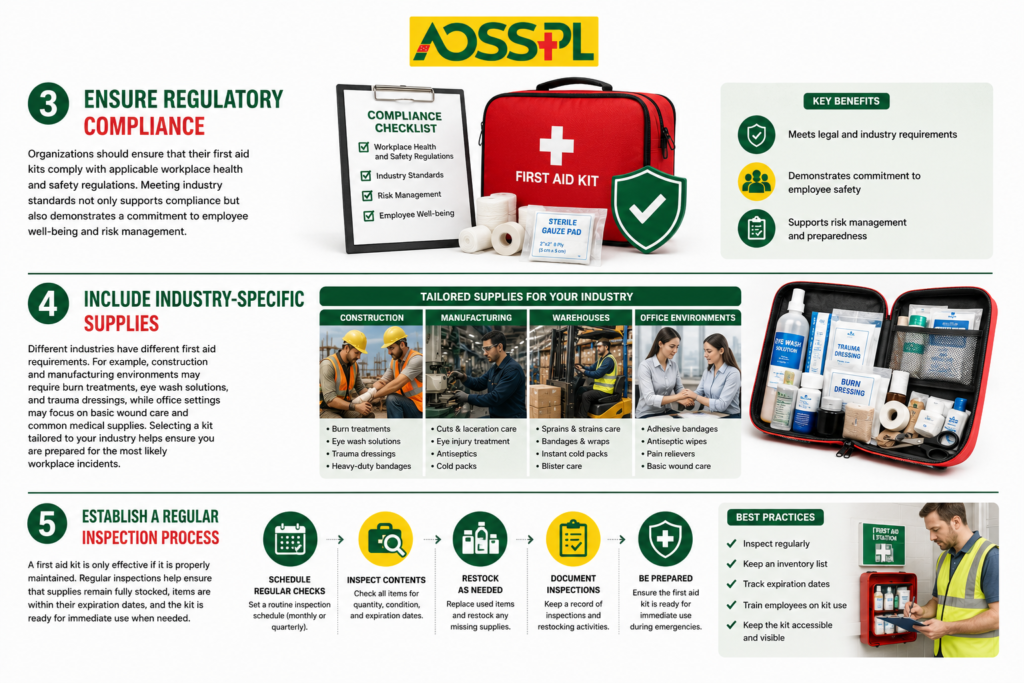
Establish a Regular Inspection Process
A first aid kit is only effective if it is properly maintained. Regular inspections help ensure that supplies remain fully stocked, items are within their expiration dates, and the kit is ready for immediate use when needed.
Conclusion
Choosing the right first aid kit is an important part of any workplace safety strategy. By assessing workplace risks, considering workforce requirements, ensuring compliance, and maintaining supplies regularly, businesses can enhance emergency preparedness and create a safer environment for employees and visitors alike.