


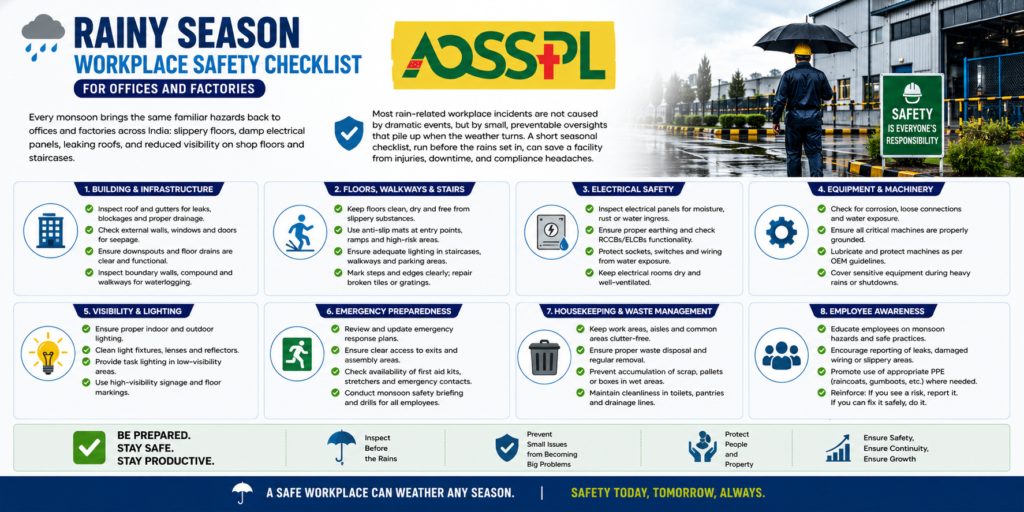
Every monsoon brings the same familiar hazards back to offices and factories across India: slippery floors, damp electrical panels, leaking roofs, and reduced visibility on shop floors and staircases. Most rain-related workplace incidents are not caused by dramatic events, but by small, preventable oversights that pile up when the weather turns. A short seasonal checklist, run before the rains set in, can save a facility from injuries, downtime, and compliance headaches.
1. Audit Flooring and Walkways First
Water tracked in from entrances is the single biggest cause of slip-and-fall injuries during the rainy season. Place anti-slip mats at every entry point, mark wet-floor zones clearly, and inspect factory floors for oil or chemical residue that becomes far more dangerous when mixed with rainwater. Warehouse aisles and loading bays deserve special attention, since forklift and foot traffic combine to make wet surfaces there riskier than anywhere else on site.
2. Protect Electrical Systems From Moisture
Roof leaks near distribution boards, damp cabling, and waterlogged sockets are responsible for a disproportionate share of monsoon-season incidents in factories. Schedule an electrical inspection before the rains begin, seal any roof penetrations, and raise portable equipment off floors that are prone to water ingress. Where flooding is a recurring issue, moving critical panels to a higher level is worth the one-time cost.
3. Keep Drainage and Roofing in Working Order
Blocked drains and clogged gutters turn ordinary rain into standing water within hours. Clear roof drains, check for any low points on the factory floor where water tends to collect, and confirm that stormwater channels around the building are free of debris. A facility that manages water at the perimeter rarely has to manage it indoors.
4. Stock Spill Response and First Aid Supplies
Rain soaked walkways combine badly with any oil, coolant, or chemical spill already on site, so this is the season to confirm that spill kits are fully stocked, clearly signed, and positioned near likely spill zones rather than tucked away in a store room. Pair this with a well-stocked, easily accessible workplace first aid kit, since minor slips, cuts, and electrical shocks are the most common injuries reported during the monsoon months.
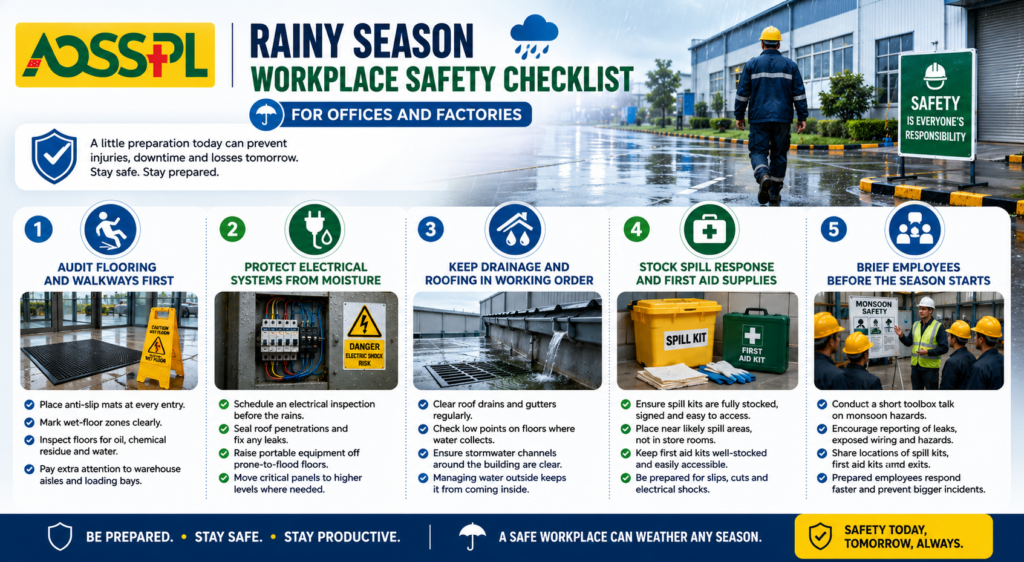
5. Brief Employees Before the Season Starts
A five minute toolbox talk on monsoon hazards, reporting procedures for leaks or exposed wiring, and the location of emergency supplies goes a long way. Employees who know exactly where the nearest first aid kit or spill kit is located respond faster and more calmly when something does go wrong.
6. Build a Simple Pre-Monsoon Checklist
- Anti-slip mats placed and wet-floor signage ready
- Electrical panels inspected and moisture-proofed
- Roof, gutters, and drains cleared
- Spill kits inspected, restocked, and repositioned near risk areas
- First aid kits checked for expiry and completeness
- Staff briefed on hazards and emergency contacts
The monsoon does not have to be a season of avoidable incidents. A short, repeatable checklist, backed by the right emergency supplies on hand, keeps offices and factories running safely through even the heaviest weeks of rain.