


Warehouses handle a constant flow of liquids: fuel, lubricants, cleaning agents, and in many facilities, chemicals that carry real health and environmental risk. A single unaddressed spill can shut down an aisle, contaminate stored goods, injure a worker, or trigger a regulatory violation. Despite this, spill response is one of the most under-prepared areas of warehouse safety, often treated as an afterthought until an incident forces the issue.
Spills Are Not a Matter of If, But When
Forklifts leak hydraulic fluid, drums develop small punctures, and containers are dropped during routine handling. None of these events are rare in a busy warehouse. What determines the outcome is not whether a spill happens but how quickly and safely it is contained once it does. Without a designated spill kit within reach, staff either improvise with whatever is nearby or, worse, leave the spill unattended while searching for supplies.
The Real Cost of an Unmanaged Spill
An unaddressed spill converts a five-minute cleanup into a multi-hour disruption. Slippery floors near the spill site raise the risk of falls, vapors from chemical spills can affect air quality across a section of the warehouse, and product stored nearby may be damaged or contaminated. For facilities handling regulated substances, delayed containment can also mean falling short of environmental and workplace safety compliance requirements.
Matching the Kit to the Hazard
Not every spill is the same, and a generic kit is rarely the right answer for a warehouse handling multiple types of liquids. A universal spill kit works well for general-purpose leaks such as water-based fluids and mild oils. Facilities working with fuels, hydraulic fluid, or lubricants are better served by an oil spill kit designed to absorb petroleum-based liquids without absorbing water. Sites storing solvents, acids, or reactive chemicals need a dedicated chemical spill kit, and any warehouse handling corrosive substances should keep an acid and alkali spill kit close to the storage area for those materials specifically.
Placement Matters as Much as Stock
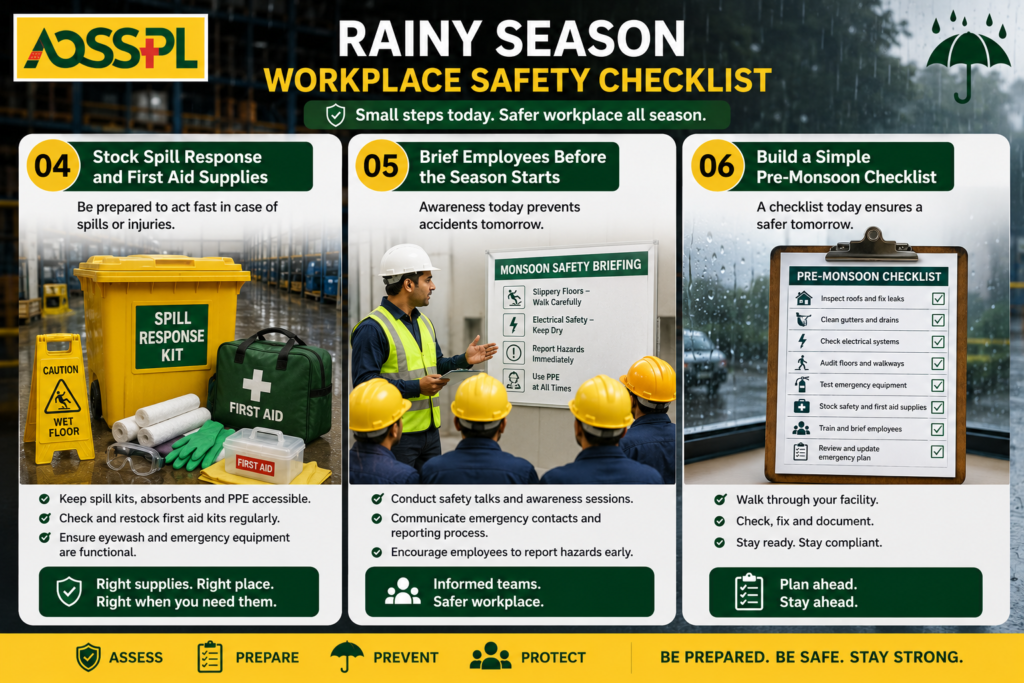
A spill kit stored in a distant supply room is nearly as ineffective as having no kit at all. Kits should be positioned at loading docks, near fuel and chemical storage areas, along high-traffic forklift routes, and at any point where liquids are transferred between containers. Clear signage and staff training on how to use the kit are just as important as having the right absorbents on hand.
Building Spill Response Into Daily Operations
- Position kits at every likely spill point, not just a central store
- Match kit type to the liquids actually handled on site
- Inspect and restock kits on a fixed schedule, not only after use
- Train staff to respond immediately rather than wait for a supervisor
- Log every spill event to spot recurring problem areas
A well-equipped, well-placed spill response system turns a potential safety and compliance crisis into a routine five-minute cleanup. For any warehouse handling liquids of any kind, that difference is worth planning for in advance rather than discovering during an actual incident.