How Schools Can Reduce the Risk of Common Accidents
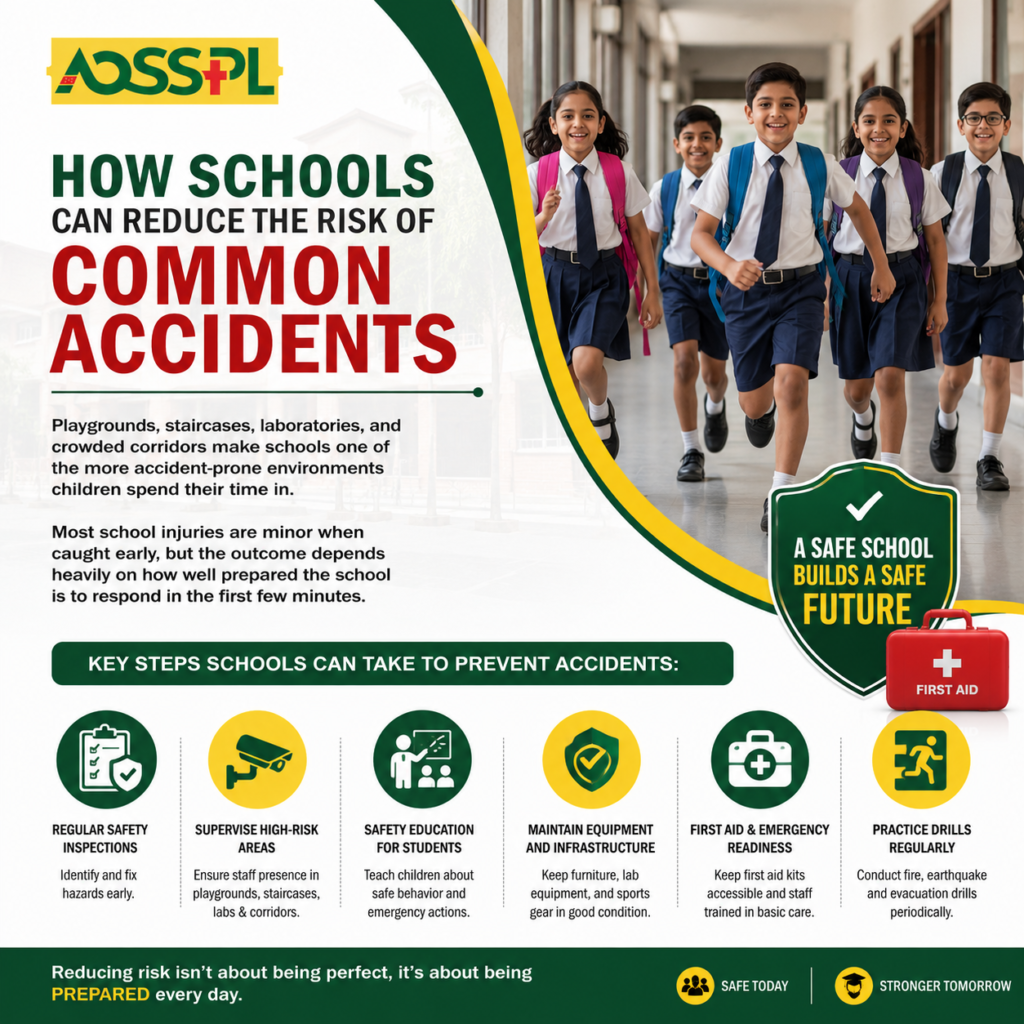
Playgrounds, staircases, laboratories, and crowded corridors make schools one of the more accident-prone environments children spend their time in. Most school injuries are minor when caught early, but the outcome depends heavily on how well prepared the school is to respond in the first few minutes. Reducing accident risk in a school setting is less about eliminating every hazard and more about building consistent habits, supervision, and readiness across the campus.
Where Most School Accidents Actually Happen
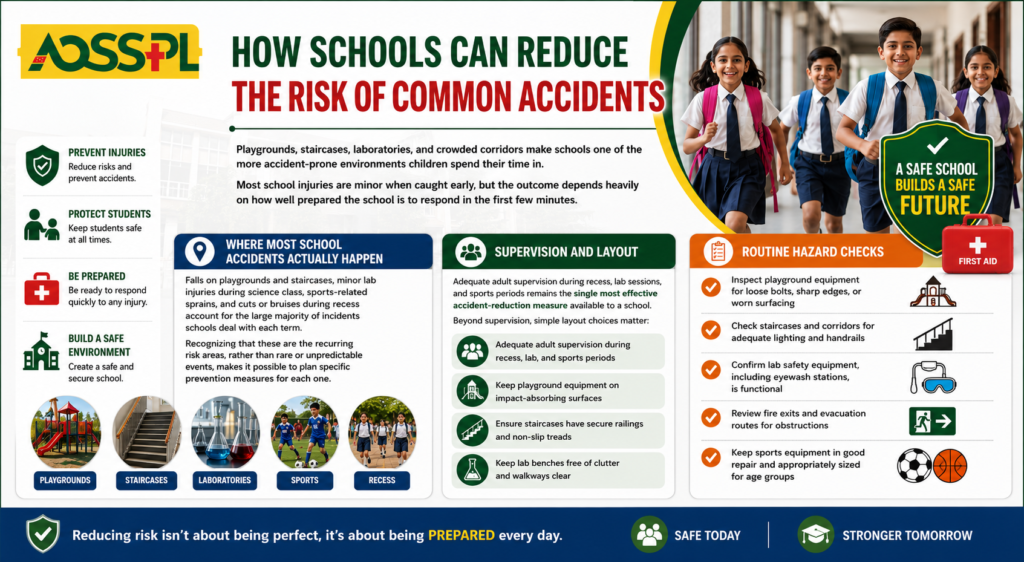
Falls on playgrounds and staircases, minor lab injuries during science class, sports-related sprains, and cuts or bruises during recess account for the large majority of incidents schools deal with each term. Recognizing that these are the recurring risk areas, rather than rare or unpredictable events, makes it possible to plan specific prevention measures for each one.
Supervision and Layout
Adequate adult supervision during recess, lab sessions, and sports periods remains the single most effective accident-reduction measure available to a school. Beyond supervision, simple layout choices matter: keeping playground equipment on impact-absorbing surfaces, ensuring staircases have secure railings and non-slip treads, and keeping lab benches free of clutter all reduce the frequency of everyday injuries.
Routine Hazard Checks
Inspect playground equipment for loose bolts, sharp edges, or worn surfacing
Check staircases and corridors for adequate lighting and handrails
Review fire exits and evacuation routes for obstructions
Keep sports equipment in good repair and appropriately sized for age groups
Readiness Matters as Much as Prevention
No amount of supervision removes every risk, which is why every school needs a properly stocked first aid kit in the nurse’s room, staff room, and ideally near high-activity zones such as the playground and sports field. A kit designed for a school setting should cover everyday needs, cuts, scrapes, minor burns, and sprains, and staff overseeing recess or physical education should know exactly where the nearest kit is and how to use it without waiting for the school nurse.
Training the People, Not Just Stocking the Kit
A first aid kit is only as effective as the person reaching for it. Basic first aid training for teachers and non-teaching staff, refreshed each year, reduces panic and delay when an incident occurs. Combined with a clear incident-reporting process, this creates a school environment where minor accidents are handled calmly and consistently rather than becoming larger disruptions.
Reducing accidents in a school is rarely about one big intervention. It is the accumulation of supervised play areas, well-maintained infrastructure, trained staff, and readily available first aid supplies that, together, keep everyday incidents minor and manageable.
Equip your school with the right first aid supplies: