How a Trekking First Aid Kit Can Save Lives in an Emergency
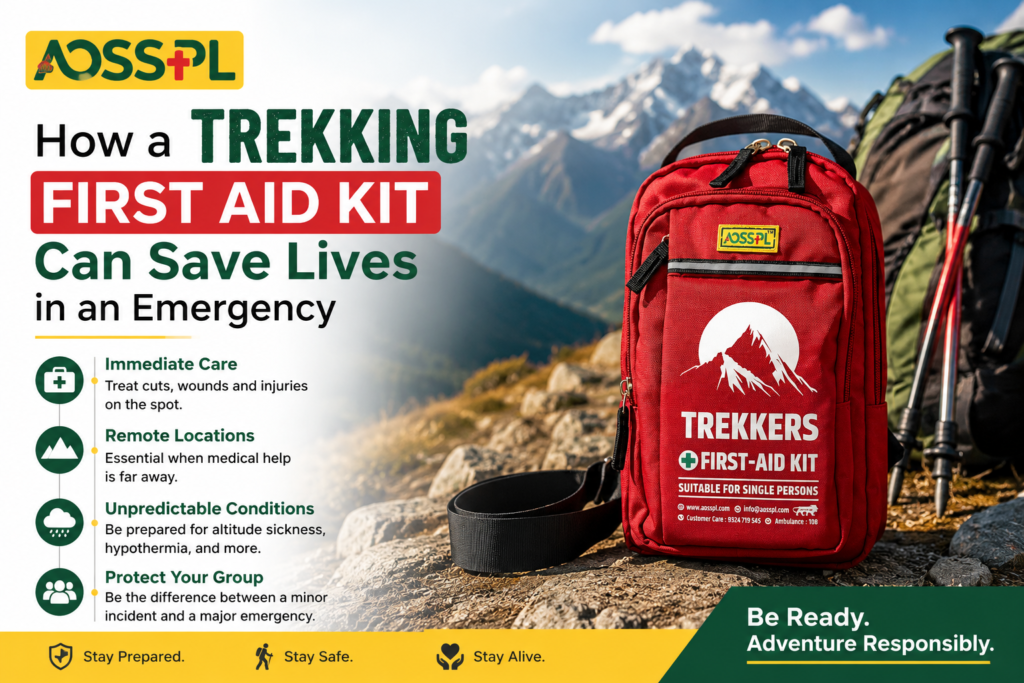
Trekking routes rarely come with a hospital around the next bend. Once a group is a few hours into a trail, the nearest medical help may be an entire day away, and altitude, weather, and terrain can turn a manageable injury into a serious emergency if it is not treated quickly. A well-designed trekking first aid kit is often the only medical resource available for hours, which makes its contents, and the trekker’s familiarity with them, genuinely life-saving.
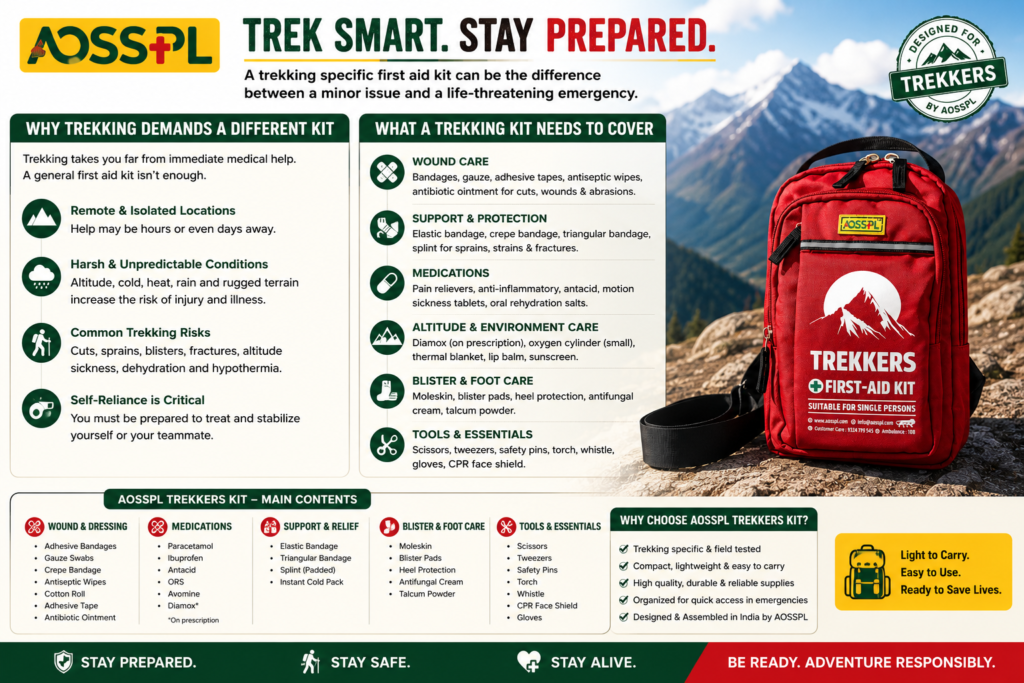
Why Trekking Demands a Different Kit
A first aid kit built for a home or office does not account for the specific risks of the trail: ankle sprains on uneven ground, blisters that can end a trek if untreated, cuts from rocks or equipment, altitude-related symptoms, dehydration, and exposure to cold or sun at higher elevations. A dedicated travel or trekking first aid kit is built around these realities, combining compact packaging with supplies chosen for remote, self-reliant use rather than convenience.
What a Trekking Kit Needs to Cover
Wound care: sterile dressings, antiseptic, adhesive bandages, and gauze for cuts and blisters
Sprain and injury support: a crepe bandage and cold pack for twisted ankles or knee strain
Medication essentials: pain relief, anti-allergy tablets, and any personal prescriptions
Environmental protection: rehydration salts, sunscreen, and a thermal blanket for exposure
Tools: scissors, tweezers, safety pins, and disposable gloves
Speed Is the Difference Maker
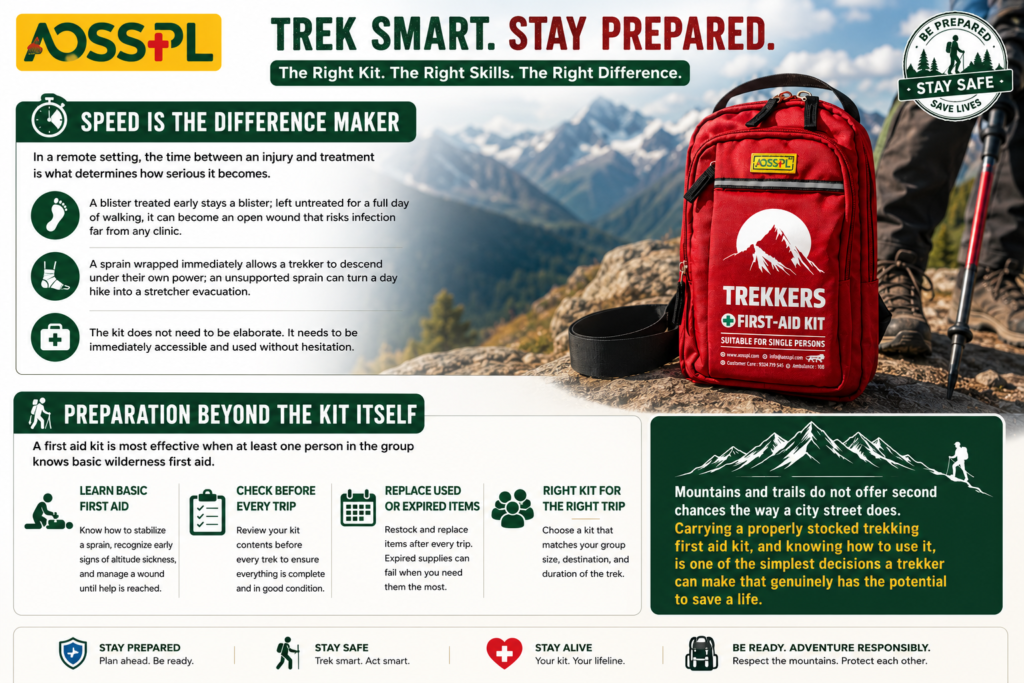
In a remote setting, the time between an injury and treatment is what determines how serious it becomes. A blister treated early stays a blister; left untreated for a full day of walking, it can become an open wound that risks infection far from any clinic. A sprain wrapped immediately allows a trekker to descend under their own power; an unsupported sprain can turn a day hike into a stretcher evacuation. The kit does not need to be elaborate. It needs to be immediately accessible and used without hesitation.
Preparation Beyond the Kit Itself
A first aid kit is most effective when at least one person in the group knows basic wilderness first aid: how to stabilize a sprain, recognize early signs of altitude sickness, and manage a wound until proper medical care is reached. Checking kit contents before every trip, replacing used or expired items, and choosing a kit sized appropriately for the group and duration of the trek are simple habits that make a real difference when something goes wrong.
Mountains and trails do not offer second chances the way a city street does. Carrying a properly stocked trekking first aid kit, and knowing how to use it, is one of the simplest decisions a trekker can make that genuinely has the potential to save a life.