

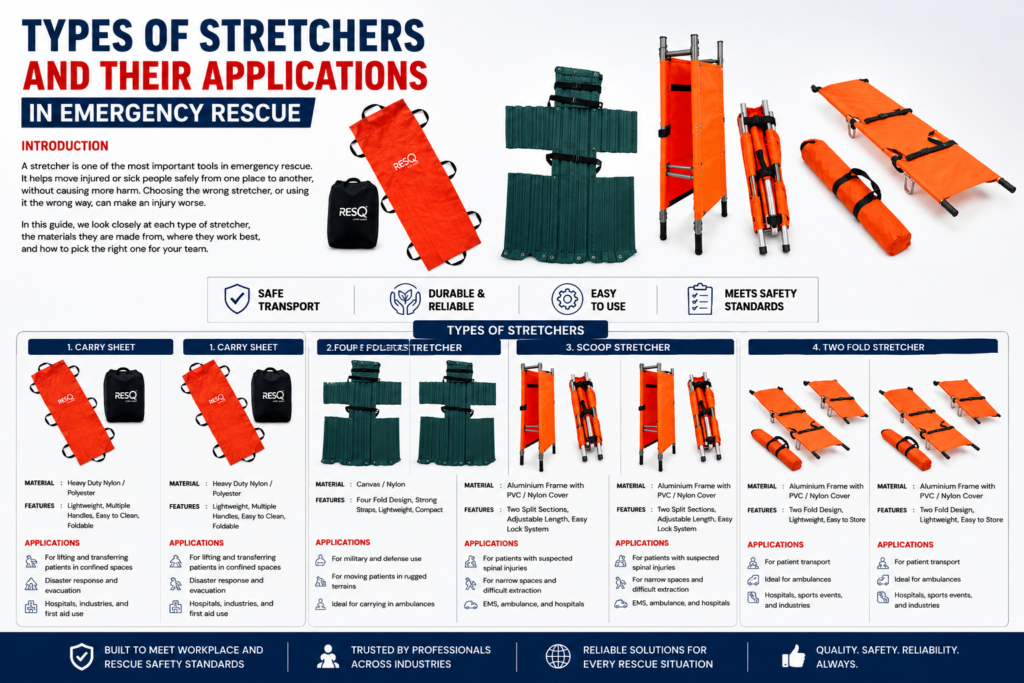
A stretcher is one of the most important tools in emergency rescue. It helps move injured or sick people safely from one place to another, without causing more harm. Choosing the wrong stretcher, or using it the wrong way, can make an injury worse. In this guide, we look closely at each type of stretcher, the materials they are made from, where they work best, and how to pick the right one for your team. AOS supplies a full range of these stretchers, built to meet workplace and rescue safety standards.
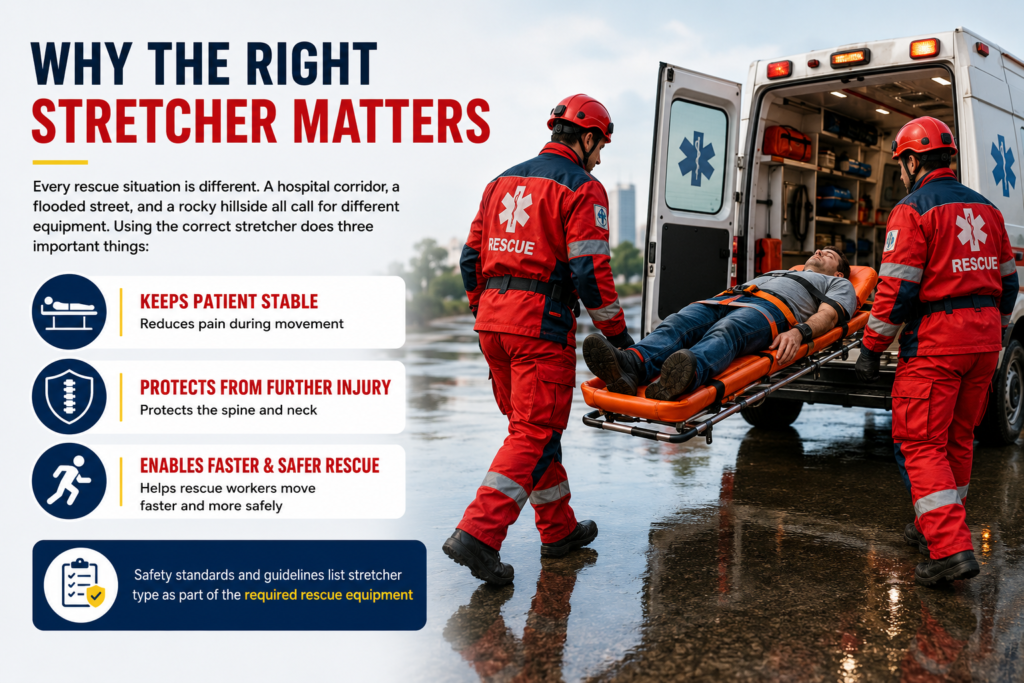
Why the Right Stretcher Matters
Every rescue situation is different. A hospital corridor, a flooded street, and a rocky hillside all call for different equipment. Using the correct stretcher does three important things:
- It keeps the patient’s body stable and reduces pain during movement
- It protects the spine and neck from further damage
- It lets rescue workers move faster and more safely
Because of this, most safety standards (such as workplace first aid rules and ambulance service guidelines) list stretcher type as part of their required rescue equipment.
1. Basket Stretcher
A basket stretcher looks like a large basket made of metal or rigid plastic. It fully surrounds and supports the patient’s body. This design makes it one of the toughest stretchers available.
Basket stretchers are the standard choice for mountain rescue teams, wildland search and rescue, and cave rescue. Their strong frame also allows them to be lifted by helicopter or lowered down a cliff using ropes.
- Best for mountain, forest, and wilderness rescue
- Used in water rescue and helicopter lifts
- Protects the patient from bumps and shocks on rough ground
- Some models float, which helps in flood or river rescue
2. Folding Stretcher
A folding stretcher has a light aluminum frame with a canvas or nylon bed. It folds flat or into a compact shape, so it takes up very little space.
This is the most common stretcher found in offices, factories, and small first aid rooms because it is affordable, easy to store, and quick to open during an emergency.
- Ideal for ambulances and workplace first aid rooms
- Quick to set up during an emergency
- Common choice for factories, warehouses, and offices
- Lightweight enough for one or two people to carry
3. Scoop Stretcher
A scoop stretcher, also called an orthopedic stretcher, splits lengthwise into two halves. Rescuers slide each half under the patient from opposite sides, then lock the two pieces together underneath. This means the patient never has to be lifted, rolled, or dragged.
Because it avoids twisting the body, a scoop stretcher is the top choice when a spinal or neck injury is suspected.
- Used for suspected neck or back injuries
- Common in hospitals and ambulance services
- Reduces movement of the injured person during transfer
- Adjustable length to fit different patient sizes
4. Wheeled Stretcher (Gurney)
A wheeled stretcher, often called a gurney, has a steel frame mounted on wheels. Staff can raise, lower, and roll it without lifting the patient’s full body weight.
This is the standard stretcher inside hospitals, clinics, and ambulances, where floors are flat and smooth.
- Used inside hospitals, clinics, and ambulance bays
- Height-adjustable for easy patient transfer
- Reduces physical strain on rescue and medical staff
- Not suitable for stairs, rubble, or rough outdoor terrain
5. Vacuum Stretcher
A vacuum stretcher is a flexible mattress filled with small foam beads. Once the patient is placed inside, air is pumped out using a hand or electric pump. As the air leaves, the beads lock together and the mattress becomes rigid, forming a custom mold around the patient’s body.
This makes it one of the best options for spinal immobilization during long transport, including transfers between hospitals or over long distances by road or air.
6. Military and SKED Stretcher
A SKED stretcher is a roll-up stretcher made from tough, flexible plastic or reinforced nylon. It rolls into a small bag, which makes it easy to carry into tight or hard-to-reach spaces such as narrow stairwells, mines, or confined industrial areas.
It is a popular choice for industrial rescue teams, the military, and technical rescue squads because it can be dragged, lifted, or lowered with rope in almost any environment.
7. Pole Stretcher
A pole stretcher is one of the oldest and simplest designs. It uses two long poles with a canvas or fabric sheet stretched between them. While basic, it remains useful for quick, short-distance carries when no other equipment is available, such as during natural disasters or mass casualty events.
Stretcher Comparison at a Glance
Here is a quick side-by-side look at how the main stretcher types compare:
| Stretcher Type | Best For | Material | Portability |
| Basket Stretcher | Mountain, water, helicopter rescue | Metal / polyethylene | Moderate |
| Folding Stretcher | Ambulances, first aid rooms | Aluminum frame, canvas | High |
| Scoop Stretcher | Spinal and neck injuries | Aluminum or plastic | Moderate |
| Wheeled Stretcher (Gurney) | Hospitals, long-distance transport | Steel frame | Low (needs flat ground) |
| Vacuum Stretcher | Spinal immobilization, transport | PVC with foam beads | Moderate |
| Military / SKED Stretcher | Combat zones, tight spaces | Reinforced nylon / plastic | High |
| Pole Stretcher | Quick manual carries | Wood or aluminum poles, canvas | High |
Materials Used in Modern Stretchers
Stretcher materials affect weight, strength, and cost. Here are the most common options:
- Aluminum: Lightweight and rust-resistant, used in folding and scoop stretchers
- Polyethylene plastic: Strong and weatherproof, common in basket stretchers
- Steel: Very strong but heavier, mostly used in wheeled gurneys
- Reinforced nylon or canvas: Flexible and easy to roll up, used in SKED and pole stretchers
How to Choose the Right Stretcher for Your Team
Think through these questions before buying rescue equipment:
- Where will the stretcher be used most — indoors, outdoors, or both?
- What kind of injuries are most common at your site?
- How many people are usually available to carry it?
- Do you need it to float, fold, or roll up for storage?
- Does it meet your local workplace or emergency safety standards?
Offices and small businesses usually need a basic folding stretcher for their first aid room. Factories and construction sites should also keep a scoop stretcher on hand in case of a fall. Rescue teams working outdoors need stronger, weatherproof options such as basket or vacuum stretchers. AOS offers all these stretcher types in one place, so you can equip your entire site without sourcing from multiple suppliers.
Stretcher Maintenance Tips
- Check straps, buckles, and locks every month for wear or damage
- Store stretchers in a dry place to prevent rust or mold
- Clean the surface after each use with a mild disinfectant
- Replace any cracked plastic or bent metal parts right away
- Keep the stretcher in a spot that is easy to reach during an emergency
Conclusion
Every workplace and rescue team should have the right stretcher ready before an emergency happens. From simple folding stretchers for an office first aid room to rugged basket stretchers for mountain rescue, the right choice protects the patient and makes the rescue team’s job faster and safer. Review your site’s risks, follow local safety standards, and invest in quality rescue equipment that your team can trust. AOS stocks a complete line of certified stretchers designed for exactly these situations, ready to equip your team today.
Frequently Asked Questions
A scoop stretcher or vacuum stretcher is best because both limit movement of the patient’s spine during transfer and transport.
A folding stretcher works best on flat, even ground. For rough terrain, a basket or SKED stretcher is a safer choice.
Most standard stretchers are rated to carry between 150 kg and 220 kg (about 330 to 485 lbs), but always check the manufacturer’s weight limit before use.
Most stretchers need at least two people, though longer carries or rough terrain may need four or more rescuers for safety.
Browse our full stretcher range at https://aosspl.com/stretchers/ and find the right rescue equipment for your team.