

A roll of caution tape is one of the simplest tools in workplace safety, but it plays a big role in preventing accidents. It warns people about danger and keeps them away from unsafe areas before an incident happens. This guide covers what caution tapes are, why they matter, where they are used, and how AOS caution tapes can help keep your workplace clearly marked and compliant.
What Are Caution Tapes?
Caution tape is a bright, easy-to-see plastic tape used to mark off a hazard or restricted area. It often comes in yellow with black text, or red and white stripes, so it stands out from a distance. Workers stretch it across or around a hazard to warn others to slow down, stay back, or avoid the area completely.
Why Caution Tapes Are Essential for Workplace Safety
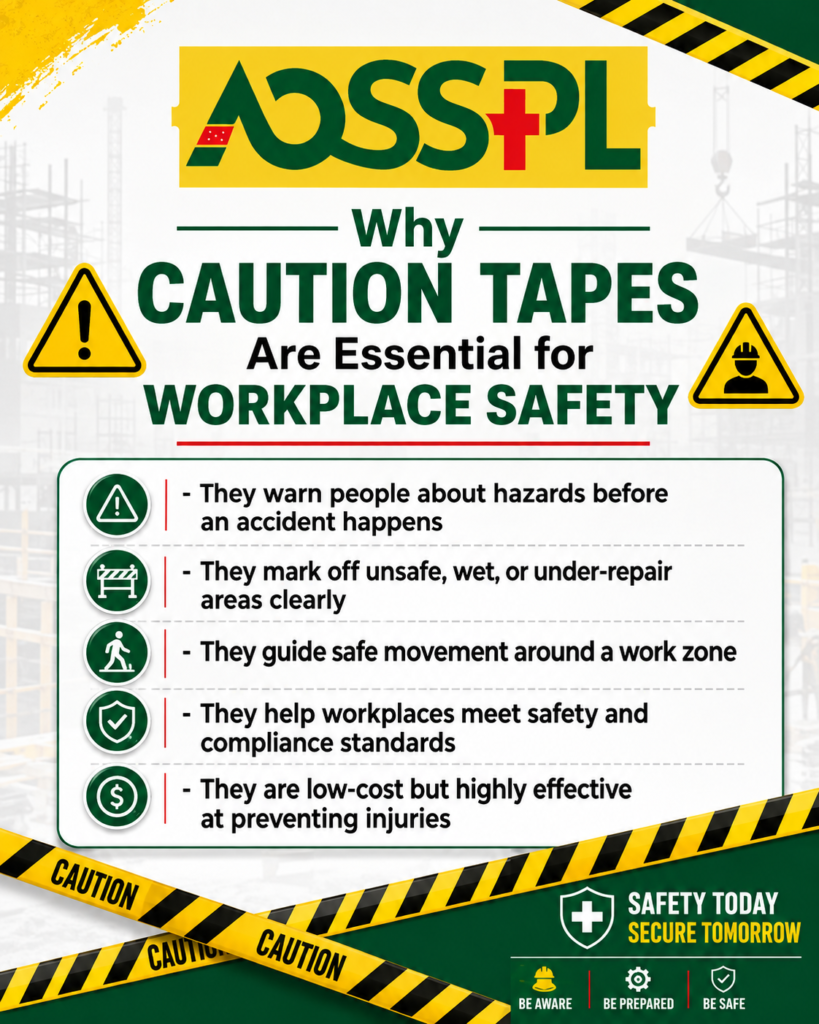
- They warn people about hazards before an accident happens
- They mark off unsafe, wet, or under-repair areas clearly
- They guide safe movement around a work zone
- They help workplaces meet safety and compliance standards
- They are low-cost but highly effective at preventing injuries
Common Uses in Different Settings
Caution tape shows up almost everywhere work happens, but the way it’s used changes by setting:
- Factories: marking machinery under repair or areas with moving equipment
- Warehouses: cordoning off forklift paths, spills, or fallen stock
- Construction sites: blocking off open holes, scaffolding, or unfinished work
- Hospitals: marking biohazard zones, wet floors, or restricted medical areas
- Public areas: closing off damaged pavements, events, or accident scenes
Types of Caution Tapes and Their Meanings
Different colors and wording send different warnings. Here’s a quick reference:
| Tape Type | Common Wording | Typical Use |
| Caution Tape | “Caution” (yellow/black) | Marks a hazard where care is needed, but entry isn’t fully blocked |
| Danger Tape | “Danger” (red/white or red/black) | Marks a serious, high-risk hazard — stay well clear |
| Barricade Tape | “Do Not Enter” / “Do Not Cross” | Blocks off restricted zones such as construction or repair areas |
| Warning Tape | “Warning” (yellow/black) | General alert for wet floors, low clearance, or ongoing work |
| Biohazard Tape | “Biohazard” (red/orange) | Marks areas with biological or medical waste risk, common in hospitals |
Benefits of Using Caution Tapes
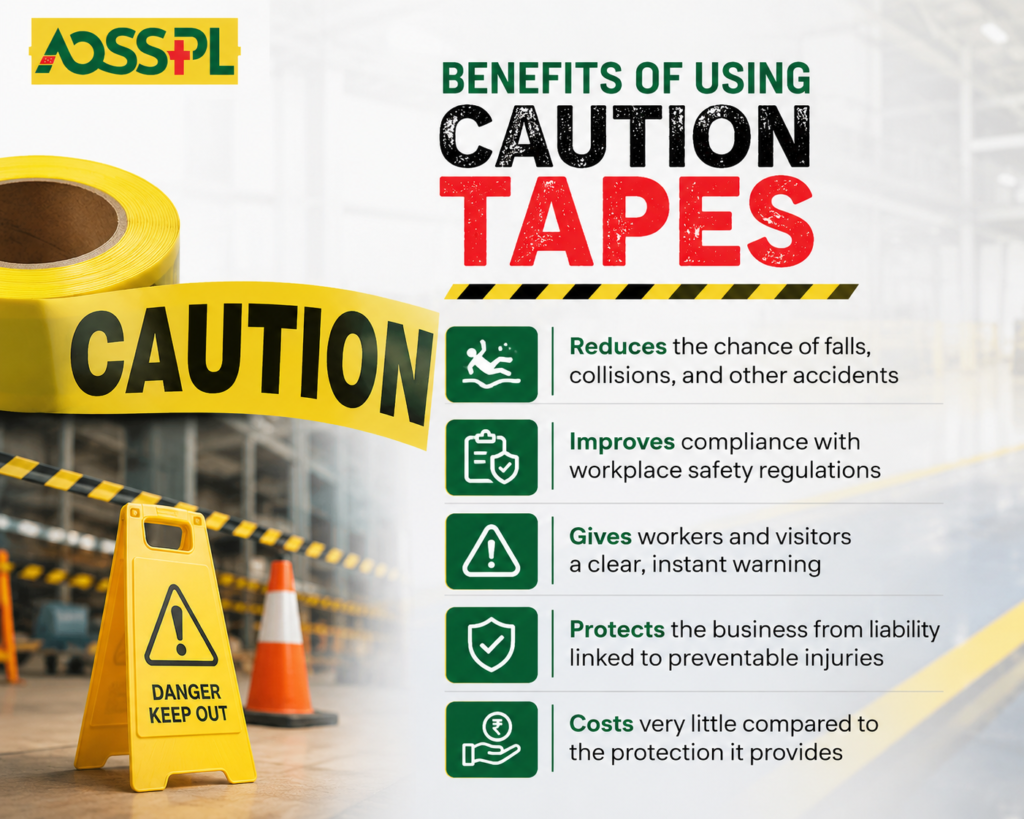
- Reduces the chance of falls, collisions, and other accidents
- Improves compliance with workplace safety regulations
- Gives workers and visitors a clear, instant warning
- Protects the business from liability linked to preventable injuries
- Costs very little compared to the protection it provides
Tips for Proper Placement and Maintenance
- Place tape at a height that is easy to see, usually waist to chest level
- Use posts, cones, or stands to keep it steady in wind or foot traffic
- Pair caution tape with a warning sign for extra clarity
- Check tape regularly for tears, fading, or loose ends
- Remove tape as soon as the hazard is fixed to avoid confusion
Choosing High-Quality Caution Tape
Not all caution tape performs the same. Cheap tape can fade, tear, or lose its stickiness quickly, which weakens the warning it’s meant to give. Look for tape that resists weather, has strong, clear print, and holds up over repeated use. AOSSPL caution tapes are made for durability and visibility, so your warnings stay clear for as long as the hazard is present.
Conclusion
Caution tape is a low-cost tool that offers a high level of protection. It warns workers and visitors about danger and helps prevent accidents before they happen. Every workplace, from factories to hospitals to public spaces, should keep quality caution tape ready for repairs, spills, or other unsafe situations. AOSSPL supplies a full range of caution and warning tapes built to stay visible and durable on any site.
Frequently Asked Questions
Caution tape (usually yellow) means care is needed, while danger tape (usually red) marks a more serious hazard that requires strict avoidance.
Yes, caution tape can be reused if it is still clean and undamaged, but it should be replaced if it is torn, faded, or no longer sticks well.
Caution tape is a visual warning only — it should not be used as a physical barrier for serious hazards like deep holes or live electrical equipment, which need stronger barricades.
Browse AOS caution tapes at https://aosspl.com/product-category/caution-tapes/ and keep your site clearly marked and safe.