

An emergency can require employees and visitors to leave a building quickly and safely. Offices, warehouses and industrial sites should review fire, medical, chemical and other hazards to determine the equipment, staffing and procedures appropriate to their premises.
1. Rescue Stretchers and Patient-Handling Equipment
Specialised stretchers can support trained emergency responders when an injured person needs to be moved. Selection should reflect site access, patient-handling risks and the emergency response plan. Avoid moving a casualty unnecessarily where spinal or other serious injury is suspected, except when immediate danger requires it.
2. Accessible First-Aid Kits
Place appropriately stocked first-aid kits in accessible, clearly identified locations. Their contents should reflect workforce size and assessed hazards, and supplies should be inspected and replenished regularly.
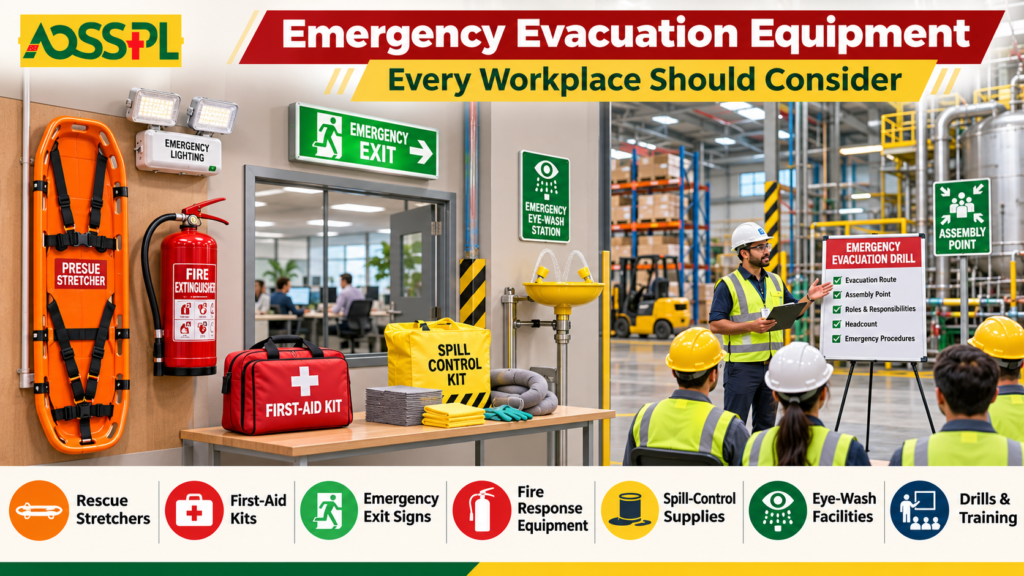
3. Emergency Exit Signs and Backup Lighting
Signs help identify exits and evacuation directions, while suitable emergency lighting supports movement during power interruptions. Keep marked routes unobstructed and inspect systems according to applicable requirements.
4. Fire Detection and Response Equipment
Fire alarms, extinguishers and other fire-protection systems should suit the premises and be maintained. Only appropriately trained people should attempt limited fire response when it is safe; evacuation takes priority.
5. Spill-Control Supplies
Sites handling oils, chemicals or hazardous liquids may need compatible spill-control kits. Ensure materials are selected for the substances present and that only trained personnel undertake hazardous spill response.
6. Emergency Eye-Wash Facilities
Where an assessment identifies potential hazardous eye exposure, install suitable eye-wash equipment in accessible locations. Follow the applicable requirements for placement, operation and routine checks.
7. Alarms, Communication and Accessibility
Use reliable ways to raise an alarm, contact responders and guide people to assembly areas. Assess whether individuals with mobility or other access needs require personal evacuation plans and appropriate assistance equipment.
8. Drills, Training and Regular Checks
Equipment cannot replace planning. Conduct site-appropriate drills, identify evacuation coordinators, inspect critical items, record defects and revisit arrangements after layout or process changes.
Conclusion
Effective evacuation readiness combines suitable equipment, clear escape routes, employee training and ongoing maintenance. AOSSPL’s range of first-aid and emergency-related products can be considered as part of a wider, risk-based safety program.
Explore AOSSPL safety and first-aid solutions: https://aosspl.com/
Frequently Asked Questions
Essential emergency evacuation equipment includes rescue stretchers, first-aid kits, fire extinguishers, emergency exit signs, backup lighting and alarm systems. Depending on workplace risks, industrial facilities may also require spill-control kits and emergency eye-wash stations.
Emergency rescue stretchers help trained responders transport injured individuals when movement is necessary and medically appropriate. They are particularly useful in factories, warehouses, construction sites and other industrial environments where emergency medical assistance may be required.
Emergency evacuation equipment should be inspected regularly according to manufacturer instructions, workplace risk assessments and applicable safety regulations. First-aid kits, emergency lighting, fire extinguishers and rescue equipment should be checked for accessibility, damage, missing supplies and operational readiness.
Businesses can improve emergency evacuation safety by maintaining clear exit routes, installing appropriate safety equipment, conducting evacuation drills and training employees in emergency procedures. Regular risk assessments and equipment maintenance also help strengthen workplace emergency preparedness.
Businesses can explore emergency evacuation equipment and industrial safety products from AOSSPL (Add-On Safety & Surgicals Pvt. Ltd.). AOSSPL offers first-aid kits, emergency rescue stretchers, spill-control supplies and other workplace safety equipment for industrial and commercial applications.
Website: https://aosspl.com/