


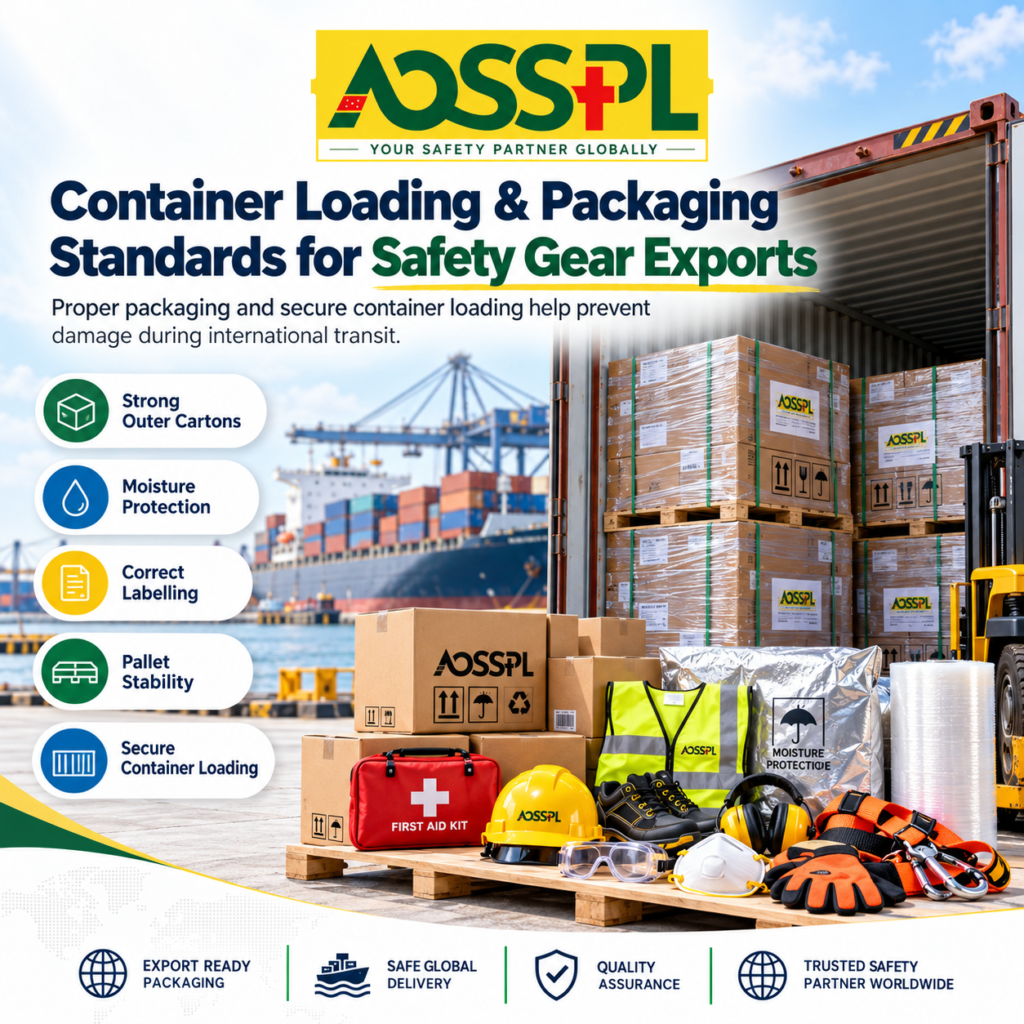
A safety product can leave the factory in perfect condition and still reach the buyer damaged if packaging and container loading are not handled correctly. International shipments can involve long transit times, repeated handling, stacking pressure, moisture and vibration. For exporters of PPE, first-aid kits, safety clothing, rescue products and industrial safety equipment, export packaging should be treated as part of the quality-control process rather than simply the final step before dispatch.
Use Strong Export-Ready Packaging
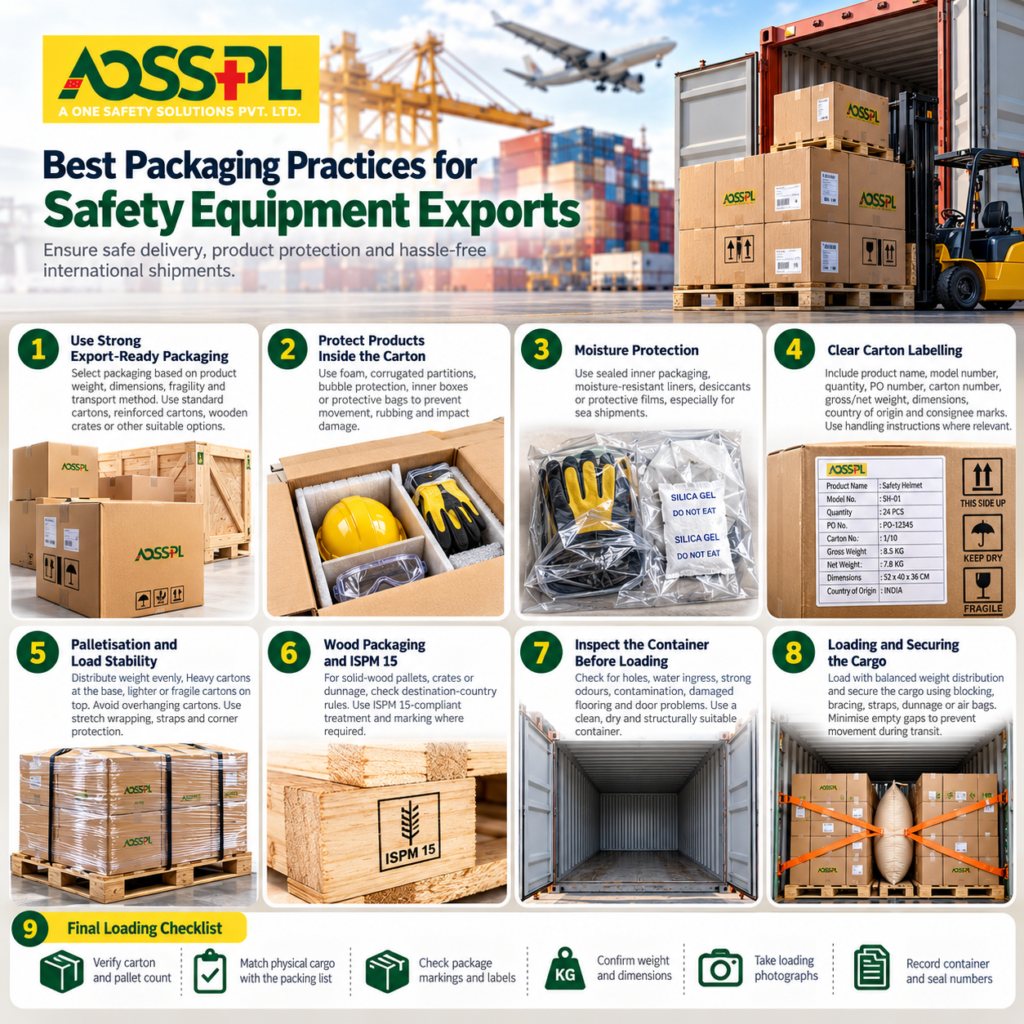
The outer packaging should be selected according to product weight, dimensions, fragility and transport method. Standard cartons may be suitable for lightweight products, while heavy or sensitive safety equipment may require reinforced corrugated cartons, wooden crates or additional internal protection. The packaging should remain stable during handling, warehousing and international transport.
Protect Products Inside the Carton
Products should not move freely inside the package. Foam, corrugated partitions, bubble protection, inner boxes, sleeves or protective bags can be used depending on the item. Sharp edges, gauges, fittings and other sensitive components require special attention. If multiple items are packed together, separators can prevent rubbing and impact damage.
Moisture Protection
Sea shipments may be exposed to humidity and container condensation. Where appropriate, exporters can use sealed inner packaging, moisture-resistant liners, desiccants or protective films. Products such as fabric PPE, first-aid contents and metal components should be packed in a way that reduces the risk of moisture-related damage.
Clear Carton Labelling
Each export carton should be easy to identify. Labels can include product name, model number, quantity, purchase-order number, carton number, gross weight, net weight, dimensions, country of origin and consignee marks. Handling instructions such as Keep Dry or This Side Up should be used where relevant.
Palletisation and Load Stability
When goods are palletised, weight should be distributed evenly. Heavy cartons should normally form a stable base, while lighter or more fragile cartons should be protected from excessive stacking pressure. Cartons should not overhang the pallet because exposed edges are more likely to be damaged. Stretch wrapping, straps and corner protection can improve pallet stability.
Wood Packaging and ISPM 15
When solid-wood pallets, crates or dunnage are used for international trade, destination-country phytosanitary rules may apply. Exporters should check whether ISPM 15-compliant treatment and marking are required before finalising the packing method.
Inspect the Container Before Loading
Before loading begins, the container should be checked for holes, water ingress, strong odours, contamination, damaged flooring and door problems. A clean, dry and structurally suitable container is essential for protecting safety products during transit.
Loading and Securing the Cargo
Cargo should be loaded with balanced weight distribution and secured so that it cannot shift during transportation. Depending on the shipment, blocking, bracing, straps, dunnage or air bags may be used. Empty gaps should be minimised because movement inside the container can damage cartons and pallets.
Final Loading Checklist
- Verify carton and pallet count
- Match physical cargo with the packing list
- Check package markings and labels
- Confirm weight and dimensions
- Take loading photographs
- Record container and seal numbers
- Inspect the final load before sealing
Conclusion
Proper packaging and container loading reduce the risk of product damage, claims and delivery problems. For safety-equipment exporters such as AOSSPL, strong packaging, correct labelling, moisture protection and secure loading can improve customer satisfaction and present a more professional image to international buyers.
Frequently Asked Questions
International shipments involve longer transit, more handling and greater exposure to moisture and stacking pressure.
It is an international phytosanitary standard that applies to certain raw-wood packaging used in international trade.
Yes. Loading photographs can provide useful shipment records and help resolve receiving or damage claims.