

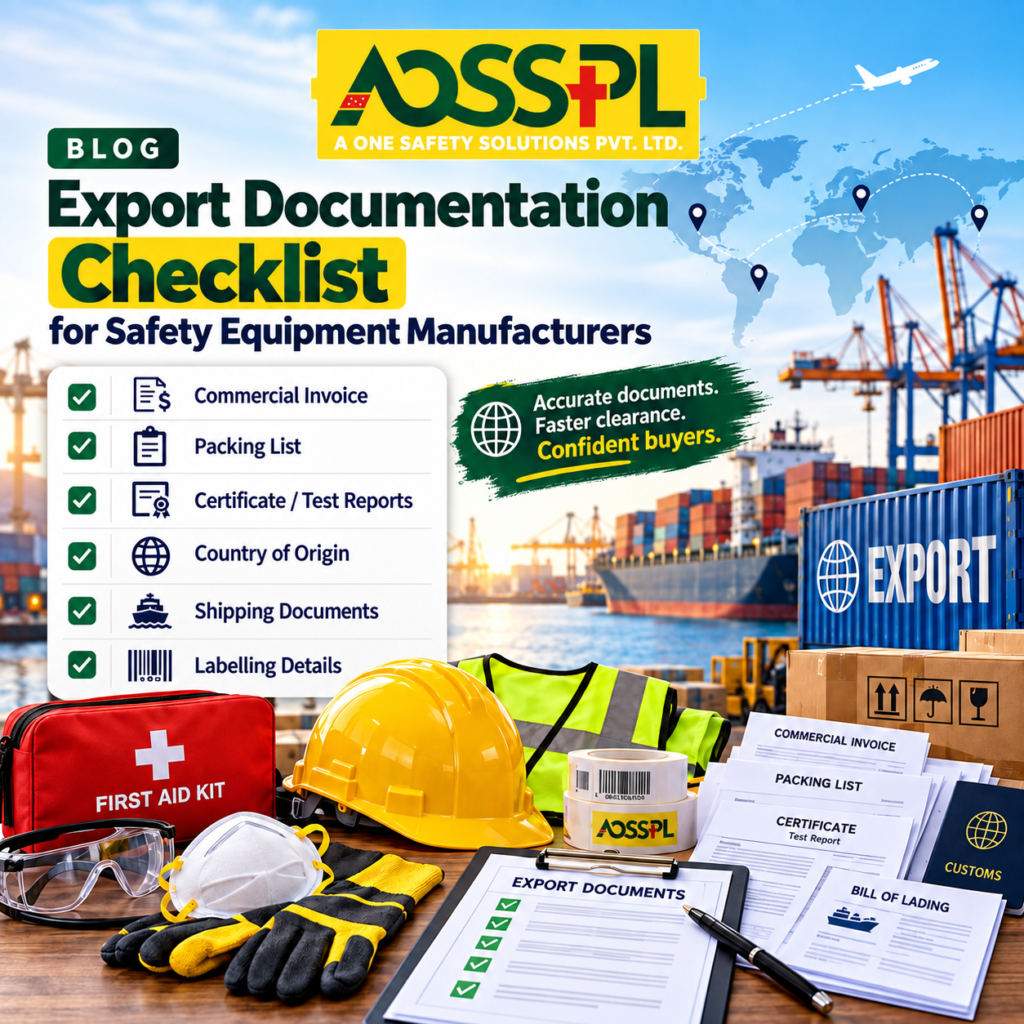
Exporting safety equipment involves much more than manufacturing the product and arranging transport. Correct export documentation is essential for customs clearance, payment processing, shipment tracking and buyer verification. For manufacturers and exporters of PPE, first-aid kits, rescue products and industrial safety equipment, even a small error in documents can result in delays, additional charges or buyer disputes. A simple pre-shipment checklist helps make the export process smoother and more professional.
1. Importer Exporter Code (IEC)
Indian businesses involved in export activities generally require an Importer Exporter Code. The IEC identifies the exporter in customs and foreign-trade procedures. Before planning an international shipment, exporters should make sure the IEC details are current and match the company information used on invoices and shipping documents.
2. Commercial Invoice
The commercial invoice is one of the most important documents in an export shipment. It normally includes exporter and buyer details, invoice number, product description, quantity, unit price, total value, currency, HS code, country of origin, payment terms and agreed Incoterms. Product descriptions should be clear and consistent with the purchase order.
3. Packing List
The packing list explains how the goods are packed. It should show the number of cartons or pallets, quantity per package, net weight, gross weight, dimensions and package markings. For mixed safety-equipment orders, carton-level information helps customs officers, freight forwarders and the buyer identify the shipment correctly.
4. Shipping Bill
The shipping bill is a key customs document for goods exported from India. Information in the Shipping Bill should match the commercial invoice, packing list and shipment details. Errors in value, quantity, classification or consignee information can create avoidable customs queries.
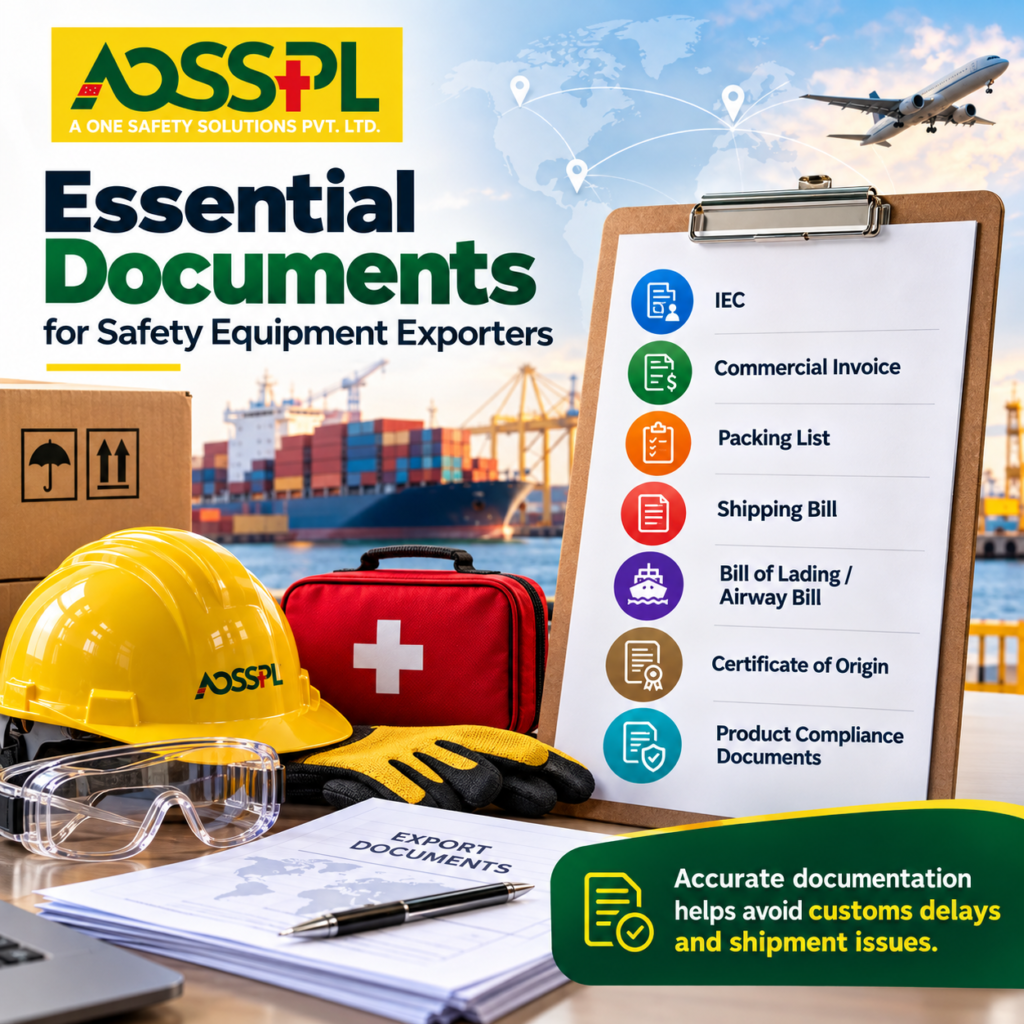
5. Bill of Lading or Airway Bill
For sea freight, the carrier generally issues a Bill of Lading, while air shipments use an Airway Bill. These transport documents confirm shipment details and are important for cargo movement, buyer records and, in some cases, payment processing.
6. Certificate of Origin
A Certificate of Origin confirms where the goods were manufactured or produced. Depending on the destination and trade arrangement, the buyer may require a preferential or non-preferential certificate. Exporters should confirm this requirement before dispatch instead of waiting until the shipment reaches customs.
7. Product Compliance Documents
Safety equipment may require additional technical documents depending on the product and destination market. These can include ISO certificates, CE declarations, product test reports, technical data sheets, material certificates, inspection reports or user instructions. Buyers should clearly state any mandatory documents in the purchase order.
Pre-Shipment Checklist
- Confirm purchase order and buyer details
- Check invoice value, currency and HS code
- Match packing list with physical cargo
- Verify product certificates and test reports
- Confirm carton markings and country of origin
- Check gross and net weight
- Ensure all shipping and customs documents use consistent information
Why Accuracy Matters
Incorrect documentation can lead to customs delays, storage charges, shipment holds, payment delays and disputes. The best practice is to review all commercial, logistics and compliance documents together before the cargo leaves the factory
Conclusion
For safety-equipment manufacturers, export documentation is a critical part of order fulfilment. A complete and accurate document set helps speed up customs clearance and gives international buyers greater confidence in the supplier. AOSSPL can strengthen its export process by maintaining a standard documentation checklist for every bulk international order.
Frequently Asked Questions
Key documents generally include the commercial invoice, packing list, shipping bill and applicable transport document.
Not always. The requirement depends on the destination country, buyer and applicable trade arrangement.
They may. Product-specific compliance and test documents depend on the product type and destination market.