Global Safety Standards: ISO, CE, and Compliance Requirements for Safety Products
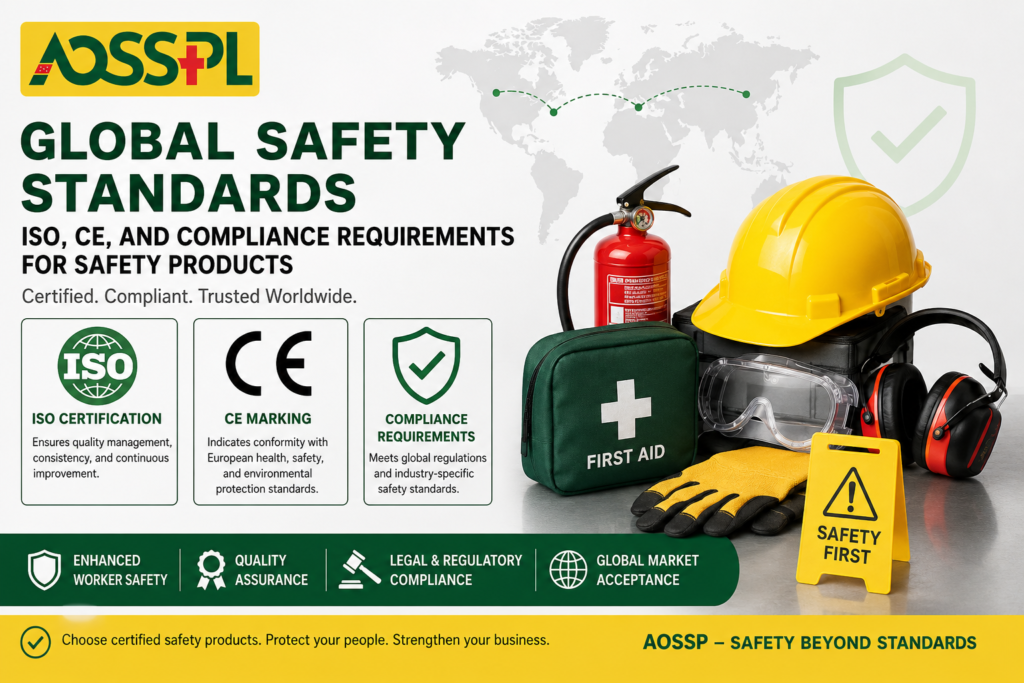
Safety products play a critical role in protecting workers across industries. Whether it’s personal protective equipment (PPE), safety signage, first aid supplies, or industrial safety equipment, meeting recognized safety standards is essential. Certifications such as ISO and CE help businesses ensure that safety products meet quality, performance, and regulatory requirements.
What Are Safety Standards?
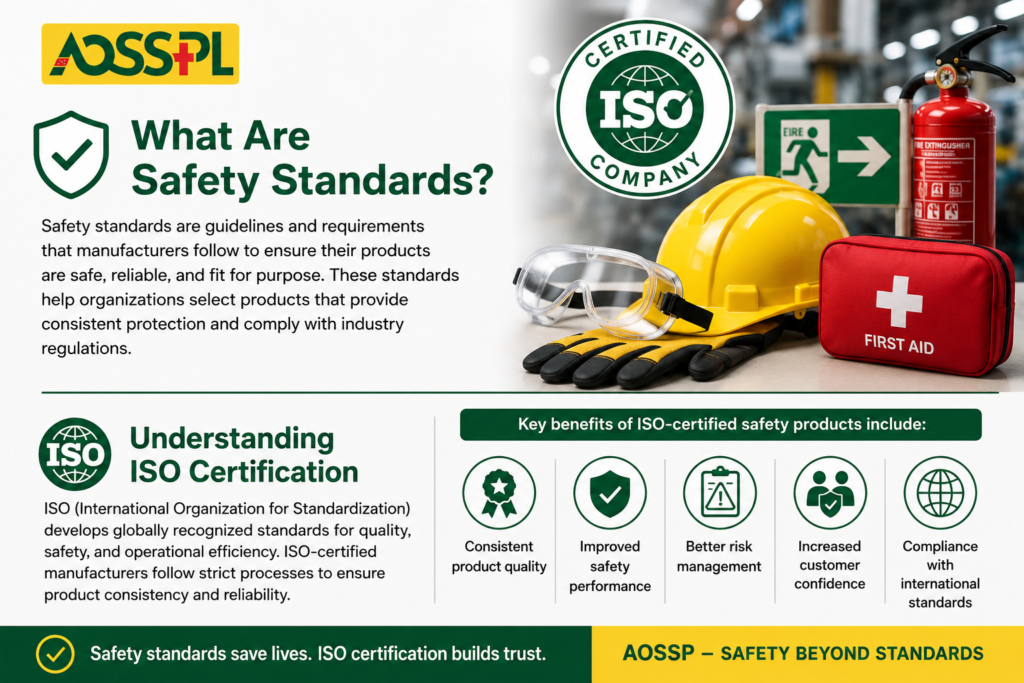
Safety standards are guidelines and requirements that manufacturers follow to ensure their products are safe, reliable, and fit for purpose. These standards help organizations select products that provide consistent protection and comply with industry regulations.
Understanding ISO Certification
ISO (International Organization for Standardization) develops globally recognized standards for quality, safety, and operational efficiency. ISO-certified manufacturers follow strict processes to ensure product consistency and reliability.
Key benefits of ISO-certified safety products include:
Consistent product quality
Improved safety performance
Better risk management
Increased customer confidence
Compliance with international standards
What Is CE Marking?
CE marking indicates that a product meets the health, safety, and environmental requirements applicable in the European market. It demonstrates that the manufacturer has assessed the product and confirmed its compliance with relevant regulations.
Products with CE marking often undergo testing and evaluation to ensure they meet required safety standards before entering the market.
Why Compliance Matters
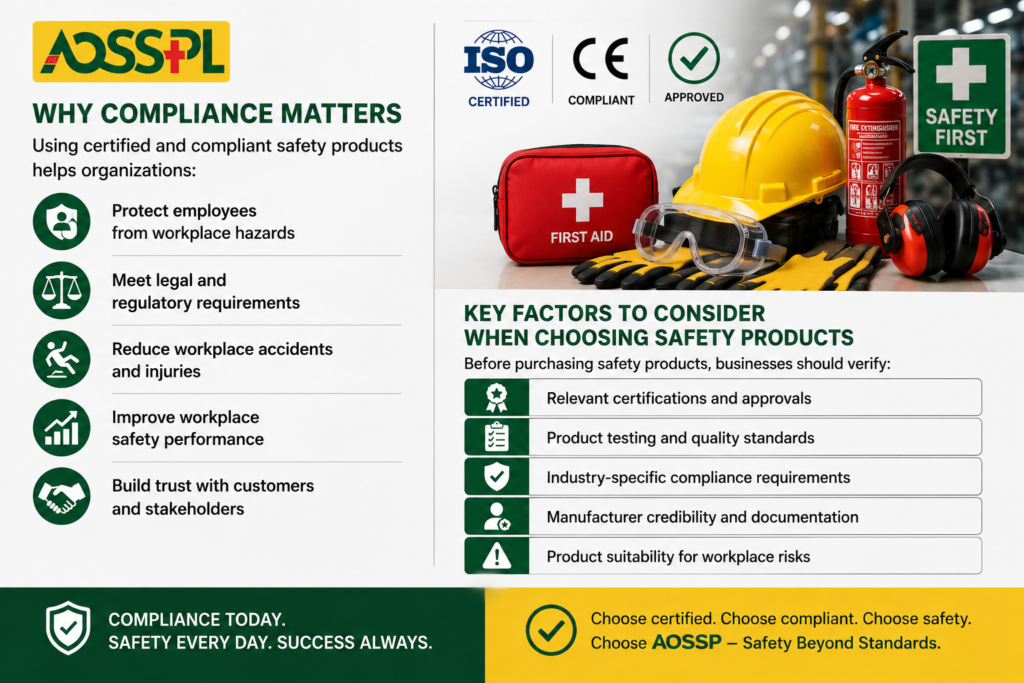
Using certified and compliant safety products helps organizations:
Protect employees from workplace hazards
Meet legal and regulatory requirements
Reduce workplace accidents and injuries
Improve workplace safety performance
Build trust with customers and stakeholders
Key Factors to Consider When Choosing Safety Products
Before purchasing safety products, businesses should verify:
Relevant certifications and approvals
Product testing and quality standards
Industry-specific compliance requirements
Manufacturer credibility and documentation
Product suitability for workplace risks
Supporting a Safer Workplace
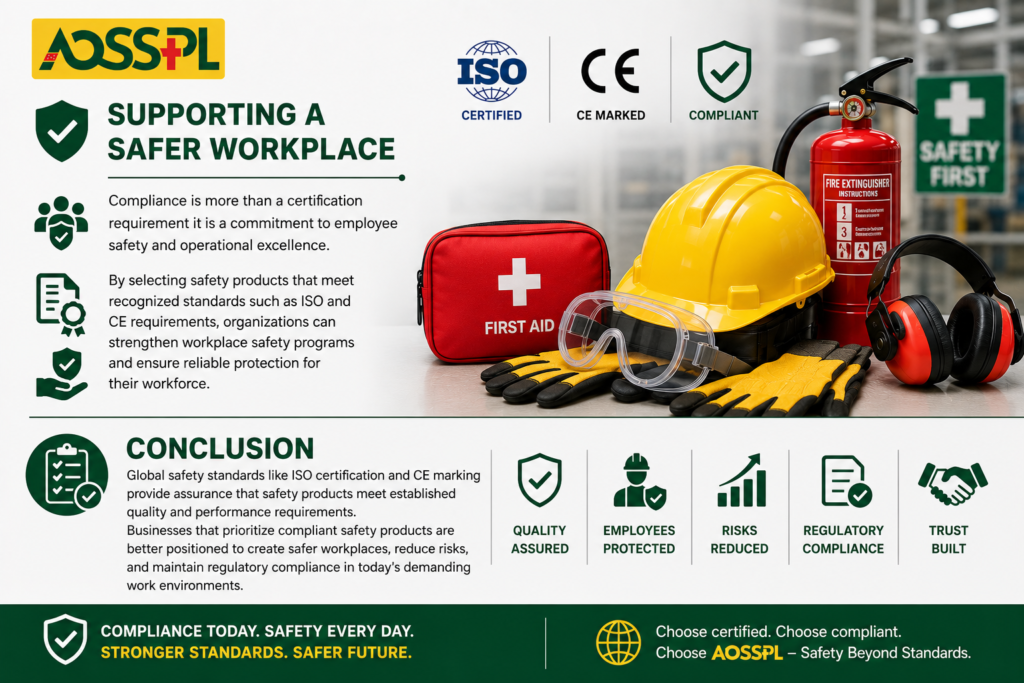
Compliance is more than a certification requirement it is a commitment to employee safety and operational excellence. By selecting safety products that meet recognized standards such as ISO and CE requirements, organizations can strengthen workplace safety programs and ensure reliable protection for their workforce.
Conclusion
Global safety standards like ISO certification and CE marking provide assurance that safety products meet established quality and performance requirements. Businesses that prioritize compliant safety products are better positioned to create safer workplaces, reduce risks, and maintain regulatory compliance in today’s demanding work environments.