

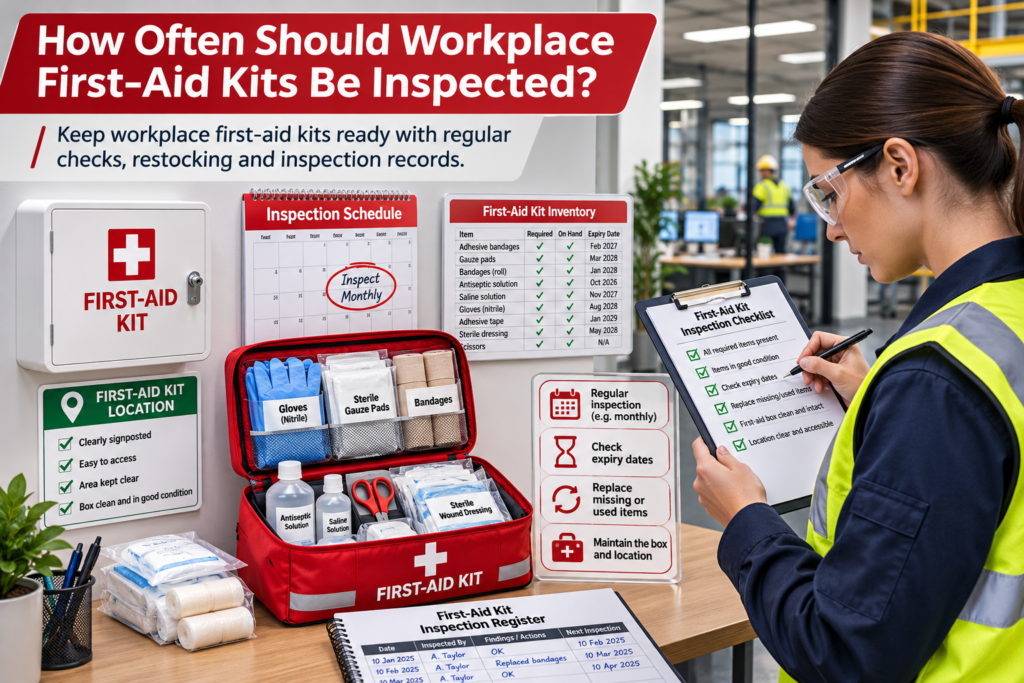
A first-aid kit is useful only when its supplies are available, suitable and in good condition. Establishing a repeatable inspection routine is a practical way to support emergency readiness in offices, factories, warehouses and construction sites.
1. Set an Inspection Schedule Based on Risk
There is no single inspection interval suitable for every workplace. A monthly detailed check may be practical for a low-risk office, while frequently used or higher-risk kits may need weekly inspections and daily visual checks. Relevant legal obligations, workplace risk assessments and actual use should determine the final interval.
2. Check Expiry Dates and Packaging
Review expiry dates for dated supplies and check that sterile dressings remain sealed. Remove damaged, contaminated or expired items in line with product instructions. If a kit contains medicines, apply the site policy and applicable rules for their storage and use.
3. Replace Missing Items Immediately
After any first-aid incident, replenish used items promptly. Compare the kit contents against the inventory list tailored to the number of workers and site risks. Keep replacements readily available so the kit is not left incomplete.
4. Inspect the Box and Its Location
Check for broken hinges, poor seals, moisture, dust or visible contamination. Label the kit clearly and position it where designated responders can reach it quickly without obstruction.
5. Maintain a Simple Inspection Register
Record the kit location, inspection date, inspector, missing items, expiry issues and corrective actions. A documented log makes recurring problems easier to spot and helps demonstrate that the inspection process is being followed.
6. Make Employees Aware of First-Aid Arrangements
Display first-aider contact details, explain reporting procedures and confirm that trained employees know how to access supplies. Review arrangements when staff numbers, site layouts or hazards change.
Conclusion
A consistent inspection system is more valuable than an occasional checklist exercise. Set a risk-based frequency, replace used supplies immediately and assign clear ownership to keep workplace first-aid kits ready.
Explore AOSSPL safety and first-aid solutions: https://aosspl.com/
Frequently Asked Questions
Workplace first-aid kits should be inspected regularly based on workplace risks and usage. Monthly inspections may be suitable for low-risk offices, while factories, warehouses and construction sites may require weekly inspections or daily visual checks. The final inspection frequency should follow workplace risk assessments and applicable safety requirements.
A workplace first-aid kit inspection should include checking expiry dates, sterile packaging, missing supplies, damaged items and the condition of the first-aid box. Inspectors should also ensure the kit is clearly labelled, easily accessible and properly stocked for workplace emergencies.
Regular first-aid kit maintenance ensures that essential medical supplies remain available and in usable condition during emergencies. It helps businesses identify expired products, replace missing items and maintain workplace emergency preparedness.
Employers should assign a responsible person, such as a trained first-aider, safety officer or designated employee, to inspect workplace first-aid kits. The assigned person should maintain inspection records, report deficiencies and ensure supplies are replenished promptly.
Businesses can explore workplace and industrial first-aid kits from AOSSPL (Add-On Safety & Surgicals Pvt. Ltd.). AOSSPL provides first-aid and safety equipment solutions for offices, factories, warehouses and other commercial establishments.
Explore AOSSPL First-Aid Kits: https://aosspl.com/