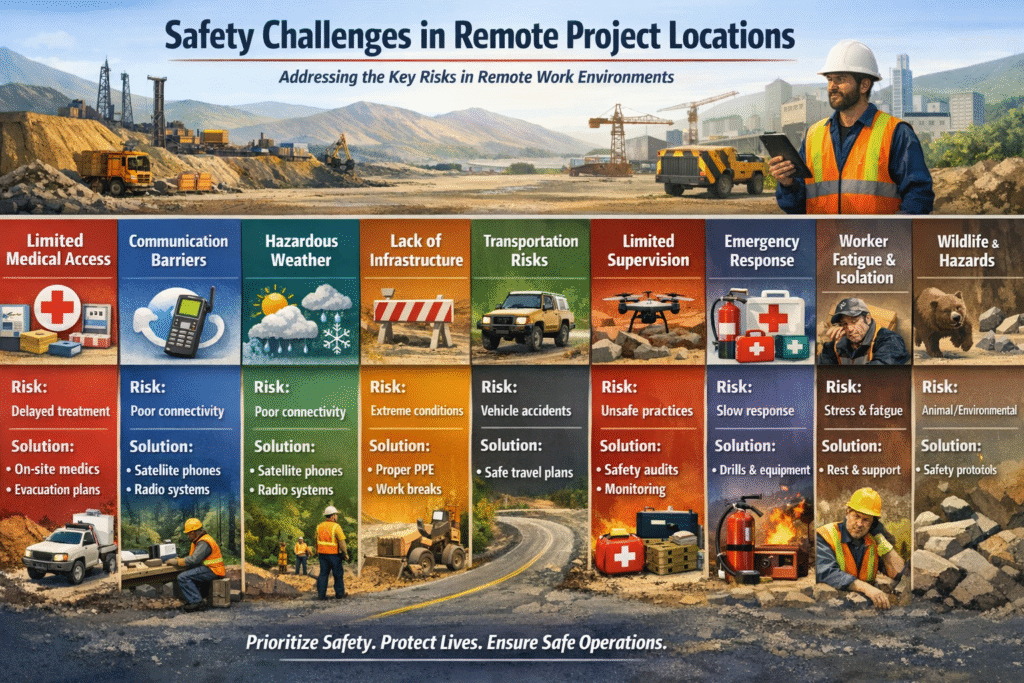
Remote project locations such as mining sites, construction zones, oil & gas fields, and infrastructure projects often operate far from urban areas. While these sites are essential for development, they come with unique safety challenges that require careful planning and management.
In this blog, we explore the key safety risks in remote locations and how to address them effectively.
Why Safety is Critical in Remote Areas
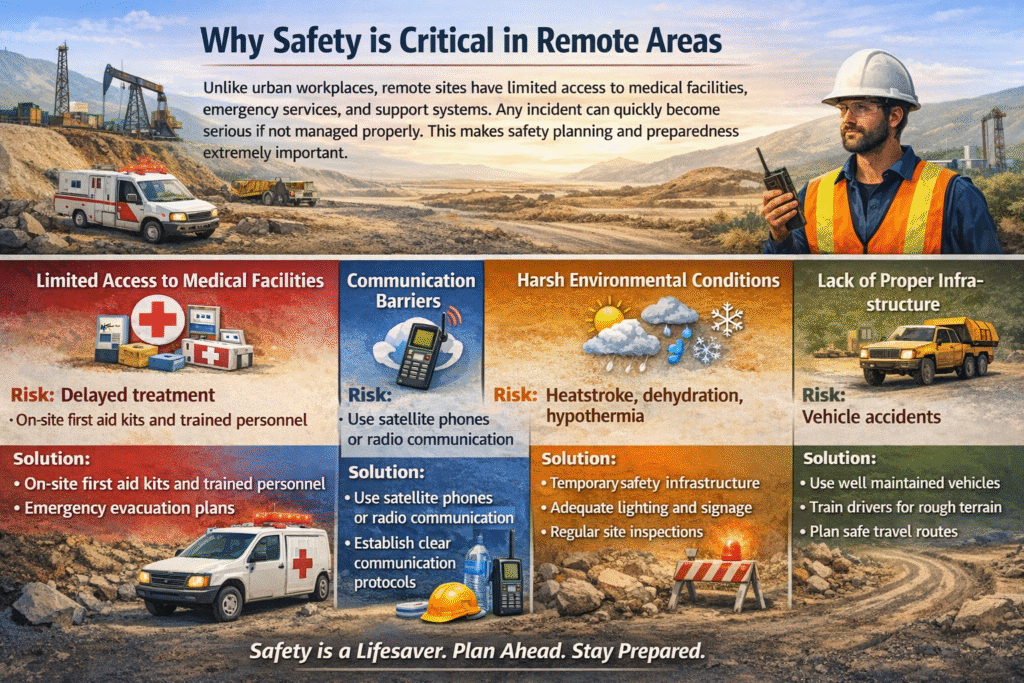
Unlike urban workplaces, remote sites have limited access to medical facilities, emergency services, and support systems. Any incident can quickly become serious if not managed properly. This makes safety planning and preparedness extremely important.
1. Limited Access to Medical Facilities
One of the biggest challenges is the lack of nearby hospitals or emergency care.
Risk: Delayed treatment can worsen injuries or become life-threatening.
Solution:
On-site first aid kits and trained personnel
Emergency evacuation plans
Tie-ups with nearest healthcare providers
2. Communication Barriers
Remote areas often have poor network connectivity.
Risk: Delays in reporting incidents or calling for help.
Solution:
Use satellite phones or radio communication
Establish clear communication protocols
3. Harsh Environmental Conditions
Extreme weather like heat, cold, rain, or high winds can increase risk.
Risk: Heatstroke, dehydration, hypothermia, or accidents.
Solution:
Provide weather-appropriate PPE
Schedule work shifts carefully
Ensure hydration and rest breaks
4. Lack of Proper Infrastructure
Remote sites may lack proper roads, lighting, or safety systems.
Risk: Increased chances of accidents and injuries.
Solution:
Temporary safety infrastructure
Adequate lighting and signage
Regular site inspections
5. Transportation Risks
Workers often travel long distances on rough roads.
Risk: Vehicle accidents and delays in emergency response.
Solution:
Use well-maintained vehicles
Train drivers for rough terrain
Plan safe travel routes
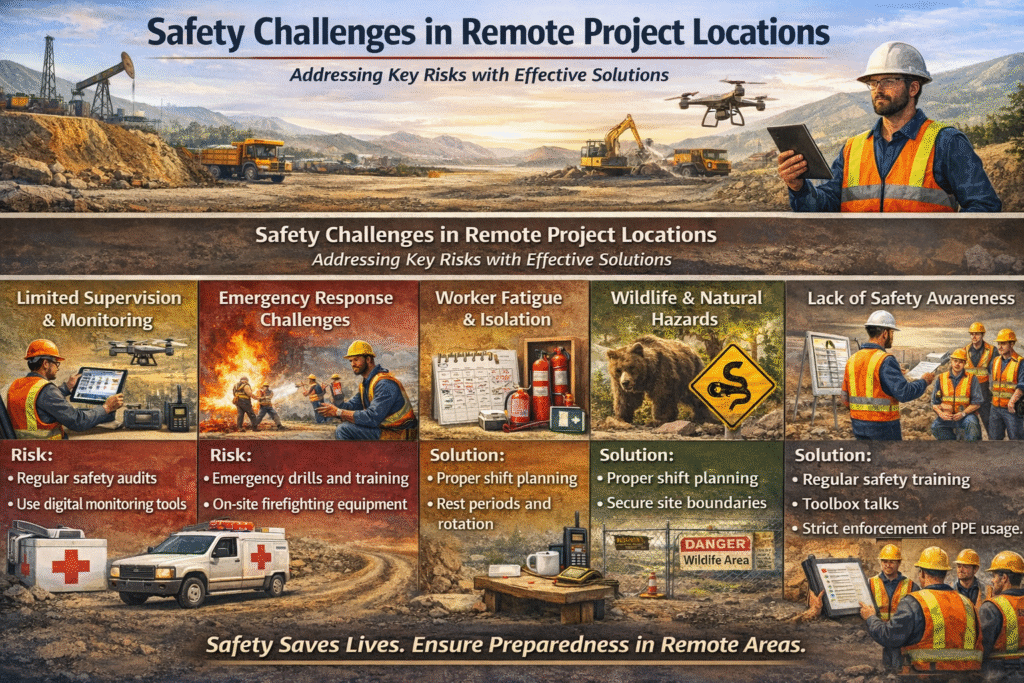
6. Limited Supervision and Monitoring
Managing teams in remote locations can be challenging.
Safety challenges in remote project locations are real and complex, but they can be managed with proper planning, training, and infrastructure. Organizations must prioritize safety measures, communication systems, and emergency preparedness to protect workers.
Ensuring safety in remote areas is not just a requirement—it is a responsibility that saves lives and ensures smooth project execution.